



How to compare white quartz vs marble for kitchen countertops?
- How to compare white quartz vs marble for kitchen countertops?
- 1) For a 40 sq ft kitchen with island and range top, what is the realistic installed cost difference between high-end white quartz and Calacatta/white marble — including fabrication waste and seams?
- 2) How should I write contract specifications to guarantee color/vein match and bookmatching for Calacatta marble but keep options for consistent white quartz?
- 3) What inspection/acceptance checklist and measurable tolerances should I use on-site when receiving white quartz slabs vs marble slabs?
- 4) How resistant are white quartz and marble to acid etching or lemon/cleaner damage — and what is a reasonable 10-year repair/maintenance budget for both?
- 5) Can white quartz slabs be placed directly next to gas ranges or under high-intensity sunlight (large picture windows) without risk of yellowing or thermal damage?
- 6) How to compare sustainability, VOC/indoor air quality, and documentation (EPD, GREENGUARD, recycled content) when specifying white quartz vs marble for green projects?
- 7) How to determine expected seam locations and number of seams for a complex island layout so marble veins are minimized while keeping costs realistic?
- 8) What warranty language and post-install obligations should I require for white quartz vs marble purchases?
How to compare white quartz vs marble for kitchen countertops?
This article answers 8 specific, procurement-oriented long-tail questions that frequently trip up first-time buyers and project managers. Each question focuses on a distinct purchasing pain point — costs, fabrication tolerances, seams and layout, inspection acceptance, heat/acid durability, warranty and contract language, sustainability documentation, and long-term repair/maintenance budgeting. The guidance below is written for people who must specify, inspect, and accept stone or engineered stone on projects.
1) For a 40 sq ft kitchen with island and range top, what is the realistic installed cost difference between high-end white quartz and Calacatta/white marble — including fabrication waste and seams?
Quick answer: Expect quartz to be in the mid-range with predictable cost; marble can be notably higher and more variable. Use ranges plus waste/seam allowances for budgeting.
- Typical installed price ranges (U.S., 2023–2024 market): quartz $50–$150 per sq ft installed; marble $60–$250+ per sq ft installed (type-specific: Carrara at lower end, Calacatta at high end).
- Fabrication and slab waste: plan 10–20% waste for straightforward layouts; complex islands or multiple seams can push waste to 20–30% (marble with matching/bookmatching can need more slabs).
- Seam labor and finishing: expect $200–$800 additional per seam for High Quality matching and edgework on marble (less for quartz because visual matching is easier).
- Example budget for 40 sq ft (installed, approximate):
- Mid-range white quartz: 40 sq ft × $90 = $3,600 (plus waste & seams ≈ $360–$720) → budget $4,000–$4,500.
- High-end Calacatta marble: 40 sq ft × $180 = $7,200 (plus higher waste & seam/bookmatching costs ≈ $1,000–$3,000) → budget $8,500–$10,000+.
Procurement action: request itemized quotes that separately list slab cost, fabrication (cutting, edging, polish), seam finishing, transport, and installation. Require the supplier to state expected waste percentage in writing for your specific layout before purchase.
2) How should I write contract specifications to guarantee color/vein match and bookmatching for Calacatta marble but keep options for consistent white quartz?
Use explicit, measurable requirements in the scope and acceptance sections of the contract:
- Require slab identification: supplier must provide slab lot numbers, slab photographs (high-res) and physical slab tags before cutting. Approve slabs in writing.
- Bookmatching and vein alignment (for natural marble): specify “bookmatch where practicable” or provide a drawing that shows seam lines and match direction. Require vendor to hold all slabs used for the job on-site (or reserved at yard) until owner acceptance.
- For white quartz: specify manufacturer/model/production lot and allow sample slab or factory sample; because quartz is engineered, request color batch number and accept up to X% variation (define X — commonly 3–5% by visual tolerance) if not using same batch.
- Define allowable repairs: for visible resin fills, cracks or consistent veining mis-match, state acceptable repairs or reject clause. Require a mockup or dry-fit of the island top and primary run before final adhese and installation for review and written signoff.
Procurement action: add a clause that payment milestones are tied to acceptance of “approved slabs and mockup” to force vendor compliance.
3) What inspection/acceptance checklist and measurable tolerances should I use on-site when receiving white quartz slabs vs marble slabs?
Use a mixed visual and dimensional acceptance checklist. Be explicit with measurable tolerances where possible.
- Slab ID and documentation: verify slab tags vs purchase order; collect photos of each slab face.
- Thickness tolerance: confirm slab thickness (2 cm or 3 cm) and accept manufacturer/fabricator tolerance (industry commonly uses ±1/8 as a standard; require supplier to state their tolerance in contract).
- Flatness and bow: request fabricator’s flatness standard; if not stated, use visual flatness and a straightedge check — no more than 1/8 deviation over 10 ft is a commonly accepted field tolerance (confirm with fabricator specs for critical projects).
- Surface finish and polish: inspect for polish uniformity, haze, microscopic pits or exposed aggregate (for engineered quartz this should be uniform; for marble, natural pits and fissures may exist and should be documented prior to cutting).
- Vein and color acceptance: for marble, require approved photo comparison and mark any unacceptable vein discontinuities before cutting. For quartz, confirm batch/production code and compare physical sample to installed color under site lighting at multiple angles.
- Edge work and cut quality after fabrication: check edge parallelism, miters, radius and polish continuity at seams; small chips (<1/8) may be acceptable depending on contract; define acceptance limits in writing.
Procurement action: define an acceptance sign-off form with checkboxes tied to payment. Use the form to capture any nonconformances and remediation deadlines.
4) How resistant are white quartz and marble to acid etching or lemon/cleaner damage — and what is a reasonable 10-year repair/maintenance budget for both?
Mechanism and relative risk:
- Marble is predominantly calcium carbonate (calcite). Calcite reacts with acids (vinegar, citrus, some cleaners) causing surface etching — a loss of shine or slight roughening that is not a stain but a change in surface profile. Etching is a characteristic of marble and must be accepted as a risk for white marble surfaces in active kitchens.
- Engineered white quartz is made of ~90–93% ground quartz bound with polymer resins and pigments. Engineered quartz is non-porous and does not etch like calcite, though the resin matrix can be discolored or damaged by harsh chemicals or prolonged exposure to strong acids/alkalis or high heat.
Maintenance and 10-year repair budgeting (typical U.S. market):
- Marble: periodic sealing (if the owner chooses) does not prevent etching but can reduce staining from oils. Expect occasional professional polishing/honing/restoration for visible etch spots — ballpark $300–$1,200 per incident depending on area and finish. Plan a small contingency: $500–$2,000 over 10 years for typical wear on a busy family kitchen.
- White quartz: generally minimal maintenance — routine cleaning with mild detergent. Major repairs (chip or burn repairs) are less frequent; resin repairs and small patches may cost $150–$600. Plan a contingency: $200–$800 over 10 years for typical incidents (chips, seam rework).
Procurement action: when specifying marble for a high-use kitchen, include an owner briefing document that highlights etching as normal and set aside a renovation/resurfacing contingency. For quartz, require manufacturer care instructions and warranty details for chemical/heat exclusions.
5) Can white quartz slabs be placed directly next to gas ranges or under high-intensity sunlight (large picture windows) without risk of yellowing or thermal damage?
Key technical differences:
- Heat: quartz resins are sensitive to concentrated thermal shock. Instant contact with very hot cookware or exposed flame can crack the resin bond or cause discoloration. Use trivets or heat pads for hot pots; avoid placing cooktops directly on quartz without proper support design and heat shields when required. Marble (natural stone) tolerates higher direct heat without resin damage, but thermal shock can still cause cracking if extremes occur.
- UV and sunlight: many engineered quartz products are not formulated for sustained outdoor UV exposure — pigments or resin can yellow over time. Some manufacturers offer UV-stable formulations suitable for certain outdoor uses; always confirm with the manufacturer for your chosen color. Natural marble weathers differently outdoors and can patina; white marbles can also show staining and surface erosion over time outdoors.
Procurement action: require the fabricator to confirm heat and UV limits in writing. For ranges, specify heat protection details in the scope (trivet requirement, combustion clearances, backsplash height, cutout support backing). For large sunlit kitchens, request manufacturer confirmation that the selected quartz color is UV-stable for interior glazing conditions.
6) How to compare sustainability, VOC/indoor air quality, and documentation (EPD, GREENGUARD, recycled content) when specifying white quartz vs marble for green projects?
What to ask suppliers/brands:
- Request Environmental Product Declarations (EPDs) or third‑party life‑cycle assessments for the slab you are buying. EPDs quantify cradle-to-gate impacts and are common for larger manufacturers.
- Ask for GREENGUARD/UL Indoor Air Quality or similar low‑emission certifications if indoor air quality is a priority. Some engineered quartz products carry GREENGUARD certification; many natural stone products are inert but quarrying and transport impacts differ.
- Request documentation about recycled content, percentage of preconsumer aggregate, and any formal sustainability commitments (e.g., water recycling in fabrication, energy sourcing). Some quartz brands publish sustainability reports and manufacturing LCA results.
Procurement action: include a clause that the vendor must provide EPD and GREENGUARD (or equivalent) documentation prior to final acceptance if the project requires LEED points or specific IAQ criteria.
7) How to determine expected seam locations and number of seams for a complex island layout so marble veins are minimized while keeping costs realistic?
Guidance and practical steps:
- Obtain manufacturer/fabricator slab dimensions before templating — standard engineered quartz slabs commonly measure around 3000 mm × 1400 mm (~118 × 55), and natural stone slab sizes vary by quarry and cut. Knowing slab size defines how many seams are needed.
- Perform a full digital layout (CAD nesting) prior to slab purchase. For marble, request slab-face scans or high-res photos to plan bookmatching and minimize mismatched veins; require mockups for the island faces where the eye is drawn.
- Seam placement rules: avoid seams across focal areas (sink run, cooktop). Place seams at cabinetry joins or under lip returns where possible. For marble, plan seams so veins align or are bisected predictably — this may increase slab usage and cost.
Procurement action: include a clause requiring the fabricator to supply a seam plan and 1:1 digital mockup for signoff before cutting. Require the supplier to list the slab IDs used for the job and keep the remaining slabs from the lot until final acceptance.
8) What warranty language and post-install obligations should I require for white quartz vs marble purchases?
What to require explicitly in contracts:
- Manufacturer warranty for engineered quartz: require a copy of the manufacturer’s written warranty that specifies coverage (typically 10–25 years against manufacturing defects). Make sure exclusions are explicit (e.g., heat damage, improper installation, abuse, UV in outdoor use).
- Workmanship warranty from fabricator/installer: require a separate workmanship warranty (commonly 1–5 years) covering seams, adhesives, and installation defects. Make this warranty assignable to a new owner if re-sale is possible.
- For marble: there is usually no manufacturer warranty for visual characteristics; require fabricator warranty for fabrication/installation and a pre-install acceptance of all slabs so the owner accepts natural variations at time of cutting. Define a remediation timeline for defects discovered after installation (e.g., chip repair response within 7 business days).
Procurement action: require warranties as separate signed exhibits and tie final payment to receipt of signed warranty documents and slab approvals.
BELLASTONE advantages — brief procurement summary
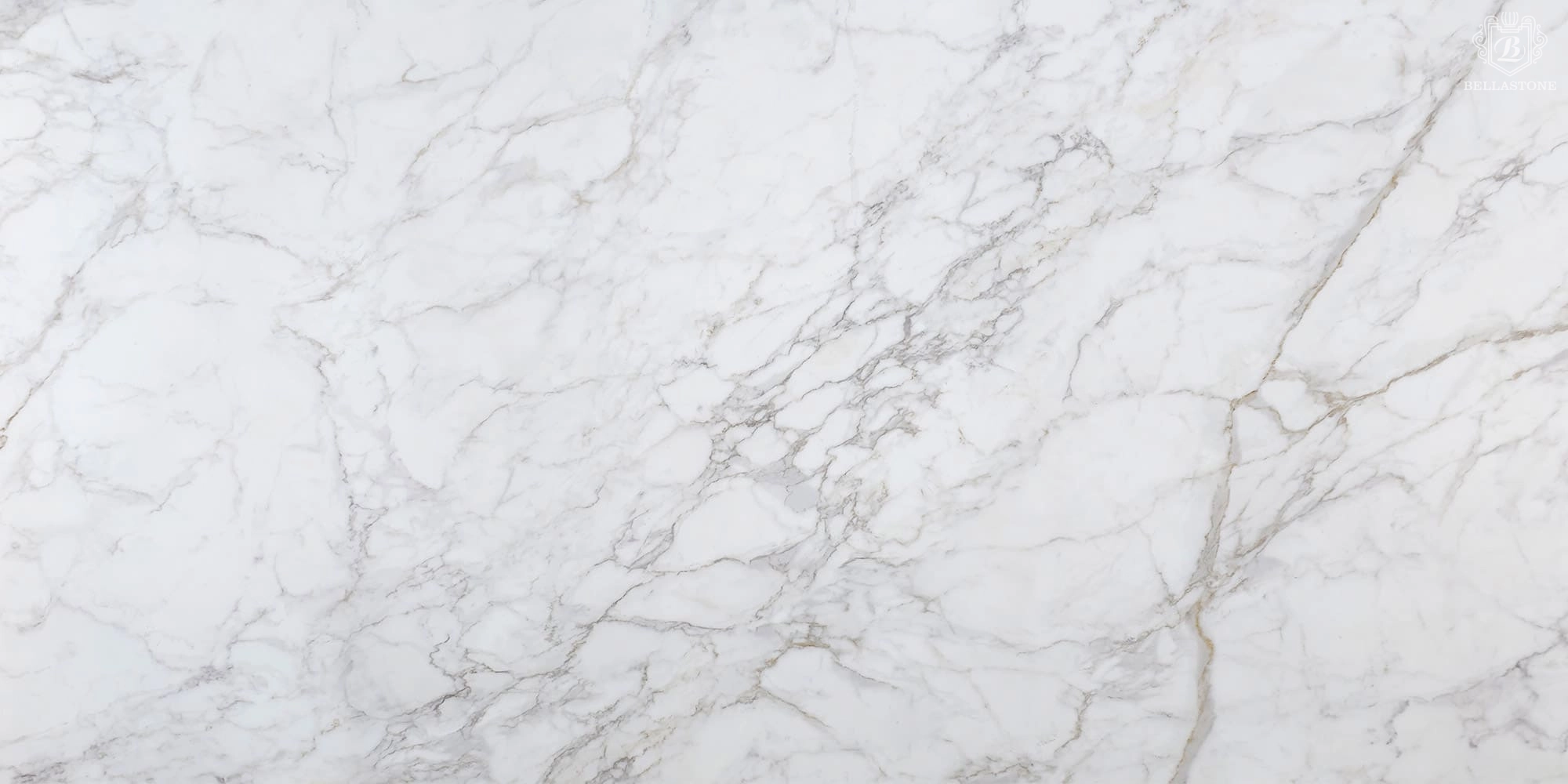
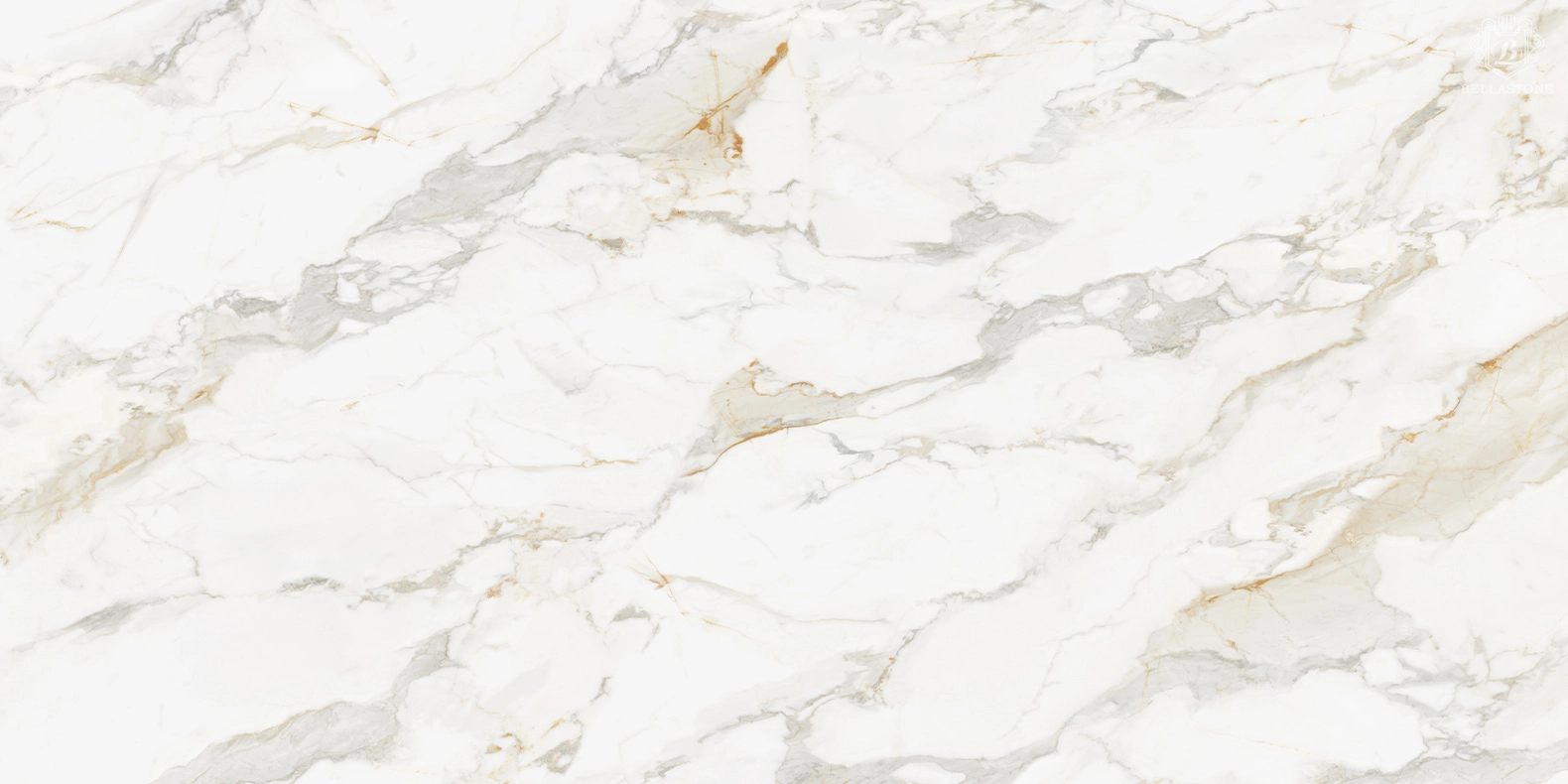
BELLASTONE supplies engineered white quartz slabs with consistent color batches, factory EPD and GREENGUARD documentation on request, and a standard 15-year limited warranty covering manufacturing defects. Their slabs are available in standard 3 cm thickness with industry-standard tolerances and a documented heat-resistance guidance sheet. For projects requiring vein-matched marble aesthetics but with quartz performance, BELLASTONE offers veined quartz ranges and a documented slab-reservation process and digital mockups to support bookmatching-style installations with lower waste.
References (data sources, access dates)
- Caesarstone — “What is Quartz?” (manufacturer composition and care). Accessed 2024-06-10. https://www.caesarstone.com/what-is-quartz/
- Cambria — “What is Engineered Quartz?” (composition, warranty examples). Accessed 2024-06-10. https://www.cambriausa.com/what-is-quartz/
- Cosentino / Silestone — Care & maintenance and outdoor use guidance (heat/UV recommendations). Accessed 2024-06-10. https://www.cosentino.com/
- Natural Stone Institute — Stone care, sealing, and etching guidance for marble. Accessed 2024-06-10. https://www.naturalstoneinstitute.org/
- Mohs scale explanation — Britannica (hardness comparison: quartz ≈7, calcite ≈3). Accessed 2024-06-10. https://www.britannica.com/science/Mohs-scale
- HomeAdvisor / Angi cost guidance — Installed countertop cost ranges (quartz, marble). Accessed 2024-06-10. https://www.homeadvisor.com/ and https://www.angi.com/
- GREENGUARD / UL Environment — Indoor Air Quality certification program information. Accessed 2024-06-10. https://www.greenguard.org/
- Industry fabrication and slab-size references (manufacturer technical datasheets). Examples: Caesarstone and Cambria slab tech info. Accessed 2024-06-10.
Note: All cost ranges and service costs are market-representative estimates (U.S. 2023–2024). Always obtain manufacturer-specific technical data sheets, EPDs, warranty documents and a written slab-reservation and mockup procedure from your supplier prior to purchase.


FAQ
How to clean and maintain quartz stone?
Routine maintenance is quite straightforward:
Regular cleaning: Wipe with a soft cloth and neutral detergent, no special maintenance agent required
Stubborn stains: Use special cleaning paste for stone materials, avoid using strong acid or alkali products
Repair suggestion: If superficial scratches are accidentally caused, contact a professional for surface polishing repair
Precautions: Avoid leaving high-temperature cookware on the stove for extended periods (it is recommended to use a trivet). Do not
How does quartz stone compare to natural marble?
Durability: Higher hardness (Mohs scale 7 vs. marble 3-5),
Stronger resistance to scratching and impact
Stability: It has almost zero water absorption rate, with no risk of infiltration or discoloration, while marble requires regular sealing and maintenance
Consistency: The color and texture are controllable, without obvious color differences and flaws found in natural stone materials
Hygienic: Compact and non-porous surface, antibacterial and mold-resistant, easy to clean, meets food contact safety standards
Economical: low long-term maintenance costs, longer service life, and better overall cost-effectiveness
Is quartz countertop durable?
Excellent physical properties, sturdy and wear-resistant
Key advantages in daily use: scratch resistance, stain resistance, and high temperature resistance
It stands out more in terms of durability compared to common countertop materials such as natural marble and granite
No special maintenance is required, and it is easy to clean. With normal use and maintenance, its aesthetics and functionality can be maintained for decades.
Care & Maintenace
Can I cut food directly on the quartz surface?
While the surface is scratch-resistant, we recommend using a cutting board to protect both the quartz and your knives.
Do I need to seal Bellastone quartz?
No sealing is required. Quartz surfaces are non-porous, making them resistant to stains, moisture, and bacteria by design.


Whether you're exploring design trends or planning your next build, our team is here to support with product advice, pricing, and tailored solutions.
Rest assured that your privacy is important to us, and all information provided will be handled with the utmost confidentiality.
By clicking "Send Inquiry Now", I agree to your processing my personal data.
To see how to withdraw your consent, how to control your personal data, and how we process it, please see our Privacy Policy and Terms of Use.
Bellastone, Premium Quartz Manufacturer & Exporter
© 2026 BELLASTONE. All Rights Reserved. | Privacy Policy | Terms and Conditions | Sitemap
Facebook
Linkedin
YouTube