



What edge sealing options exist for quartz countertop joints?
- 1) How can I minimize visible seams on large white quartz kitchen countertops when my kitchen run exceeds a single slab length?
- 2) What edge sealing options exist for quartz countertop joints to prevent moisture infiltration and adhesive staining long-term?
- 3) How does choosing veined vs uniform white quartz affect seam blending, scratch/stain masking, and final aesthetics?
- 4) What are realistic installed cost ranges today between standard white quartz and High Quality marble-look white quartz, including mitered edges and seam treatments?
- 5) How should installers prepare the subtop and support for large-format white quartz countertops to avoid movement, bowing, and seam stress?
- 6) What is the invisible/best-practice method to repair chips or edge damage on white quartz slabs so a light-colored surface looks seamless afterward?
Choosing white quartz kitchen countertops is popular for modern kitchens, but beginners and even some installers still encounter persistent pain points: visible seams on long runs, which sealant to use at joints, how to support large slabs, and how to repair chips without leaving a mark. Below are six specific long-tail questions that often have outdated or superficial answers online, followed by detailed, actionable guidance based on fabricator best practices and manufacturer installation guidance.
1) How can I minimize visible seams on large white quartz kitchen countertops when my kitchen run exceeds a single slab length?
Problem: Large continuous runs (islands plus perimeter) often exceed an individual engineered quartz slab length, and poorly placed seams quickly become the eye-catcher on a white surface.
Actionable solution:
- Understand slab sizes first. Most manufacturers produce engineered quartz slabs in ranges typically between ~120–144 inches (3.05–3.66 m) long (varies by brand). Planning should start by measuring continuous run lengths and confirming your chosen brand’s largest slab size.
- Seam placement strategy: place seams where natural breaks occur (behind cooktops, sinks, or at cabinet breaks) rather than across focal areas. Avoid seams across primary sightlines (the longest uninterrupted view from doorways or islands).
- Choose a pattern that helps hide seams. Veined or directional marble-look white quartz can use bookmatching or vein-matching to create continuity; uniform, low-variation whites hide glue lines differently—both require different seam strategies.
- Mitered seams vs butt seams: for edge continuity (thick-looking island edges), use a mitered seam with a perfectly aligned 45° joint. A properly executed miter hides the seam along the edge; however, it requires highly accurate fabrication and adds cost and time. Typical industry practice is to use a mechanical-reinforced, epoxy-bonded miter for full-edge continuity.
- Seam technique and clamping: professional fabricators use two-part epoxy fillers color-matched to the slab, then clamp under pressure until cured to minimize visible glue lines. Proper sanding and polishing across the seam restores luster so the seam is less noticeable.
- Realistic expectations: even with ideal techniques, seams may be slightly visible on very uniform white surfaces in direct lighting. Select a slab and seam method with that tolerance in mind.
2) What edge sealing options exist for quartz countertop joints to prevent moisture infiltration and adhesive staining long-term?
Problem: Water, food debris, or cleaning chemicals can exploit joints (countertop-to-backsplash, sink cutout perimeter, and seam lines), causing aesthetic staining or adhesive failure if the wrong product is used.
Accepted professional options and when to use them:
- Structural seam adhesives (two-part epoxy or polyester resin) — used by fabricators to bond slabs together. These are not primarily “sealers” but structural adhesives that can be pigmented to match the quartz. Use: permanent seams between countertop slabs. Pros: strong, gap-filling, polishable. Cons: requires professional application and curing; not a flexible movement joint.
- Sanitary 100% silicone (neutral-cure) — used at vertical transitions (countertop to backsplash, sink rims, cooktop edges) where a flexible, waterproof bead is required. Use: flexible joints that may experience movement or thermal expansion. Pros: waterproof, mold-resistant varieties available; remains flexible. Cons: cannot be used as a structural seam adhesive and is visible as a thin bead.
- Polyurethane or hybrid elastomeric sealants (e.g., MS polymers) — offer stronger adhesion and more paintable options than silicone. Use: situations requiring strong, durable movement joints with good adhesion to quartz and wood cabinets. Pros: durable and slightly more abrasion-resistant. Cons: some products are harder to tool and may require priming on certain substrates.
- Edge/porosity sealers — rarely needed for quartz — engineered quartz is non-porous; full-surface impregnators are generally unnecessary. However, freshly cut edges, resin-filled veins, or areas where polyester filler was used may benefit from a light factory-style polish or resin treatment applied during fabrication to avoid micro-staining. Use: only when fabricator notes exposed resin matrix on cut edges.
- Expansion joints — where long runs meet cabinetry or walls, provide a small gap (1/16–1/8) and seal with a flexible sanitary silicone or polyurethane to absorb movement. DO NOT rigidly bond long quartz runs to fixed structures along full length—this transmits stresses to seams.
Best practice summary: Use two-part epoxy or polyester resin for load-bearing and visible slab-to-slab seams (fabricator-installed), and use neutral-cure, mold-resistant 100% silicone or a high-quality polyurethane/MS polymer sealant for countertop-to-vertical transitions and expansion joints. Never substitute generic acrylic caulk for areas exposed to water; it fails faster and stains.
3) How does choosing veined vs uniform white quartz affect seam blending, scratch/stain masking, and final aesthetics?
Problem: Buyers pick a pattern online but later find seams, scratches, or stains more visible than expected.
Differences and recommendations:
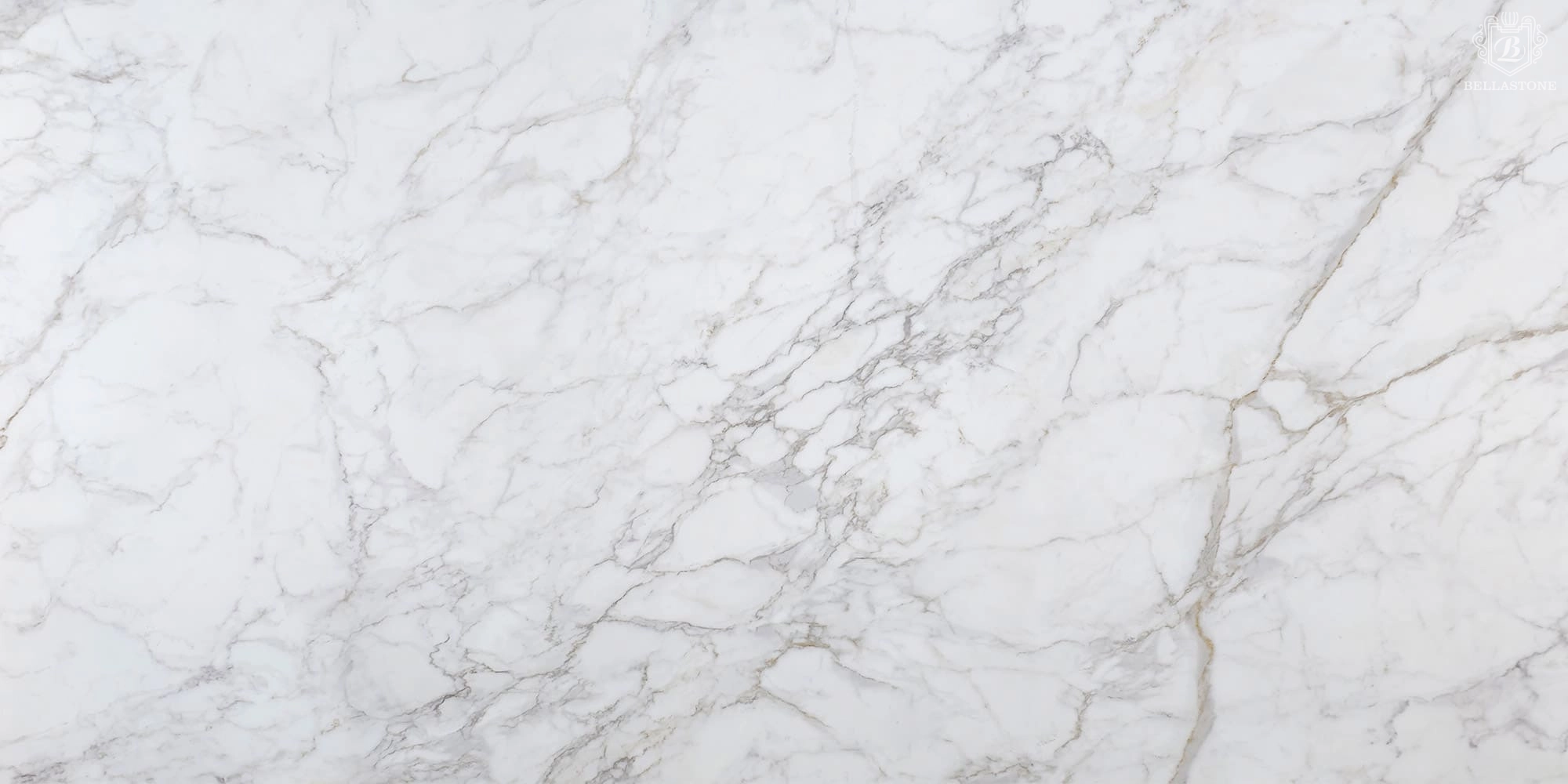
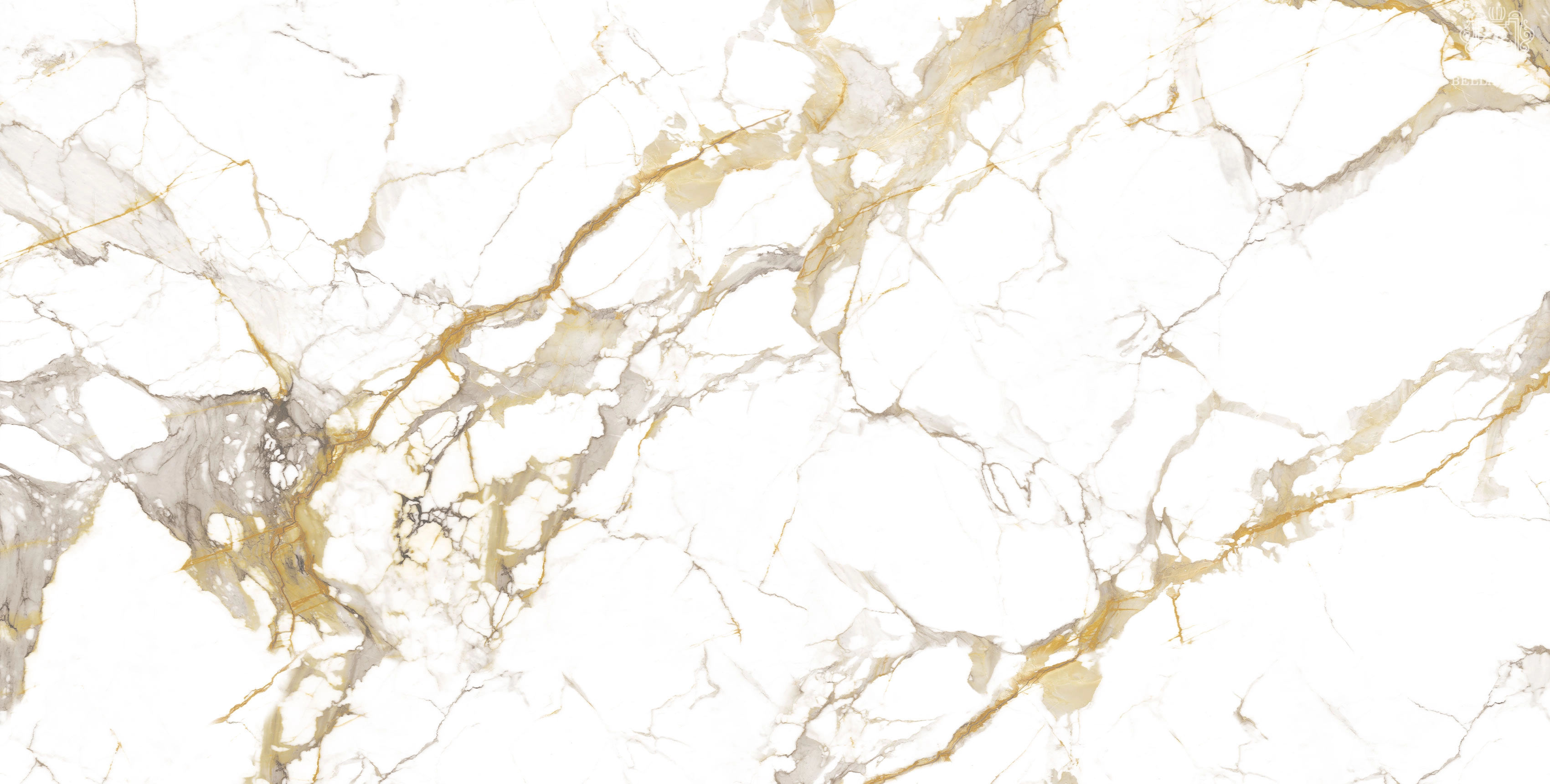
- Veined / marble-look quartz: Veining can be engineered to flow across slabs (some manufacturers offer matched slabs for bookmatching). When veining is aligned, seams can enhance continuity; when misaligned, seams are very noticeable. For marble-look white quartz, ask your fabricator for bookmatching and vein alignment plans—expect higher fabrication time and cost.
- Uniform / solid white quartz: Lower visual texture means seams and glue lines can become more visible in certain lighting, but color consistency is easier. Uniform patterns can mask minor scratches less effectively than a busy pattern because there's less visual “noise” to distract the eye.
- Scratch and stain visibility: All engineered quartz is highly scratch- and stain-resistant relative to natural stone due to the resin and quartz content, but light-colored, polished white surfaces can show darker scratches or dirt more readily. Honed or matte finishes can help hide micro-scratches and fingerprints.
- Recommendation: For long visible runs, consider veined slabs with planned vein-matching if you want a continuous, high-end look. If you prioritize low visual seam risk and easier matching, a subtle, low-variation white can be more forgiving. Discuss slab matching, sample placement, and seam mock-ups with your fabricator before purchase.
4) What are realistic installed cost ranges today between standard white quartz and High Quality marble-look white quartz, including mitered edges and seam treatments?
Problem: Many online price lists are outdated or don’t include installation, seam treatments, or edge choices—leading to sticker shock at measurement time.
2024 industry-typical cost ranges (U.S. market, regional variations apply):
- Standard white quartz slabs (entry to mid-range): Typical installed cost ranges from approximately $50–$80 per sq ft. These prices usually cover slab, fabrication with standard straight seams, 2–3cm thickness (or 3cm depending on supplier), and basic edge profiles.
- High Quality marble-look / veined white quartz: Typical installed cost ranges from approximately $80–$150 (or more) per sq ft. High Quality designs, limited-run slabs, or brands with patented veining can be at the higher end of the range.
- Additional costs: Mitered edges, complex seam matching/bookmatching, integrated sinks, and special finishes add labor and tooling time. Expect mitered edges and vein-matching to add roughly $15–$50 per linear foot in labor and fabrication (varies by region and fabricator). Specialized seam finishing and color-matching pigments also increase costs.
- Quote tip: Always request an itemized estimate that separates slab material, fabrication (including seam strategy), and installation (substrate prep, sink cutouts, edge treatment). This reveals where costs rise and helps compare multiple bids fairly.
5) How should installers prepare the subtop and support for large-format white quartz countertops to avoid movement, bowing, and seam stress?
Problem: Quartz slabs are heavy and rigid; inadequate support leads to cracking, bowing, or seam failure over time.
Fabricator and installer best practices:
- Substrate flatness: Cabinets and support structure should be flat and level. Industry guidance commonly requires cabinet top surfaces to be level and within 1/8 over 8 ft (check your fabricator’s tolerance). Shim and scribe cabinets as needed to achieve flatness before final installation.
- Plywood subtop: Use a minimum 3/4 exterior-grade plywood or equivalent rigid underlayment fastened to cabinet carcasses. Plywood distributes load and provides a continuous, stable surface for adhesive and seam support.
- Blocking and reinforcement: Provide solid blocking at cabinet ends, appliance openings, and under ranges. For islands and cantilevered sections, install steel brackets or hardwood cleats as recommended by your fabricator. Unsupported overhang guidelines vary by slab thickness: typically, 3 cm quartz (1 1/4) can be cantilevered up to ~10–12 with proper support; 2 cm (3/4) requires additional reinforcement or brackets for similar overhangs. Always confirm with fabricator for slab-specific recommendations.
- Seam alignment and backing: When planning seams, ensure underlying cabinet joins and support lines correspond to seam locations to avoid a seam over a cabinet gap or weak cabinet rail.
- Thermal/structural movement: Allow small expansion gaps at walls and vertical fixed items; use flexible sanitary sealant in these gaps. Rigidity is good, but preventing thermal stress transfer to seams is critical.
6) What is the invisible/best-practice method to repair chips or edge damage on white quartz slabs so a light-colored surface looks seamless afterward?
Problem: Chips on white quartz are visually obvious and many DIY fixes leave colored or gloss mismatches.
Professional repair workflow:
- Assess damage: Surface scratches and shallow nicks are often polished out. Deeper chips (edge or corner) require filling and color-matching.
- Clean and prep: Remove loose particles and clean with isopropyl alcohol. Mask surrounding area to protect the finish.
- Color-matched filler: Use a two-part epoxy or polyester resin system with powdered pigments mixed to match the slab’s base and any visible particulates. Professional repair kits use micro-fillers to match sparkle and translucency. For engineered veining, the repair may require layering pigments to emulate the vein.
- Apply and shape: Epoxy is placed into the chip and built up slightly above the surface. After curing, micro-sanding progresses through grits to blend the repair plane into the surrounding slab.
- Polish to match finish: Use progressively fine diamond polishing pads to restore either polished or honed finish to the repaired area so the gloss and texture match the rest of the countertop.
- When to call a pro: For light-colored, uniform white quartz, professional color matching and polishing are critical—DIY solutions rarely disappear fully. Professional repairs typically cost between $100–$300 for small chips (varies by region and difficulty); extensive edge replacement or panel replacement costs more.
Preventive tip: install protective raised cutting boards, avoid dropping heavy cookware on edges, and use sink/shower thresholds where applicable to reduce chip incidents.
Concluding paragraph: Choosing white quartz kitchen countertops gives you a durable, non-porous, low-maintenance surface with consistent color and modern aesthetics. When you plan seams, select appropriate edge and movement seals, and prepare the substrate correctly, you gain the combination of refined appearance and long-term performance. Veined designs offer high-end continuity when bookmatched; uniform whites offer easier batch matching but require careful seam planning. With proper fabrication (epoxy seam bonding, sanitary silicone for joints) and installation (flat, well-supported subtops), most common issues—visible seams, moisture infiltration, bowing, or noticeable repairs—are avoidable.
For a detailed, site-specific proposal and professional fabrication options for white quartz kitchen countertops, contact us for a quote at www.gdbellastone.com or info@gdbellastone.com.


FAQ
Is quartz countertop durable?
Excellent physical properties, sturdy and wear-resistant
Key advantages in daily use: scratch resistance, stain resistance, and high temperature resistance
It stands out more in terms of durability compared to common countertop materials such as natural marble and granite
No special maintenance is required, and it is easy to clean. With normal use and maintenance, its aesthetics and functionality can be maintained for decades.
What is the minimum order quantity?
Minimum order quantity: 30 pieces.
What scenarios is it applicable to?
Kitchen countertops and island tops, bathroom vanity tops, wall decorations and feature walls, commercial interior design, restaurants and public buildings, residential renovation projects.
Printed Artificial Quartz Stone
Can I customize patterns or colors?
Yes. BELLASTONE offers customized printed designs, colors, and slab specifications for OEM and project orders.
How does printed quartz compare to natural marble?
Printed quartz offers better consistency, lower maintenance, and higher resistance to stains and scratches, while delivering a similar visual effect.




Whether you're exploring design trends or planning your next build, our team is here to support with product advice, pricing, and tailored solutions.
Rest assured that your privacy is important to us, and all information provided will be handled with the utmost confidentiality.
By clicking "Send Inquiry Now", I agree to your processing my personal data.
To see how to withdraw your consent, how to control your personal data, and how we process it, please see our Privacy Policy and Terms of Use.
Bellastone, Premium Quartz Manufacturer & Exporter
© 2025 BELLASTONE. All Rights Reserved. | Privacy Policy | Terms and Conditions | Sitemap
Facebook
Linkedin
YouTube