



How to plan seams to minimize visibility on white quartz?
- 1) How do I plan seam locations on a 10‑foot L-shaped white quartz countertop so seams aren’t obvious near the sink and cooktop?
- 2) What slab sizes and yield calculations help avoid seams on a 12‑foot island with waterfall ends?
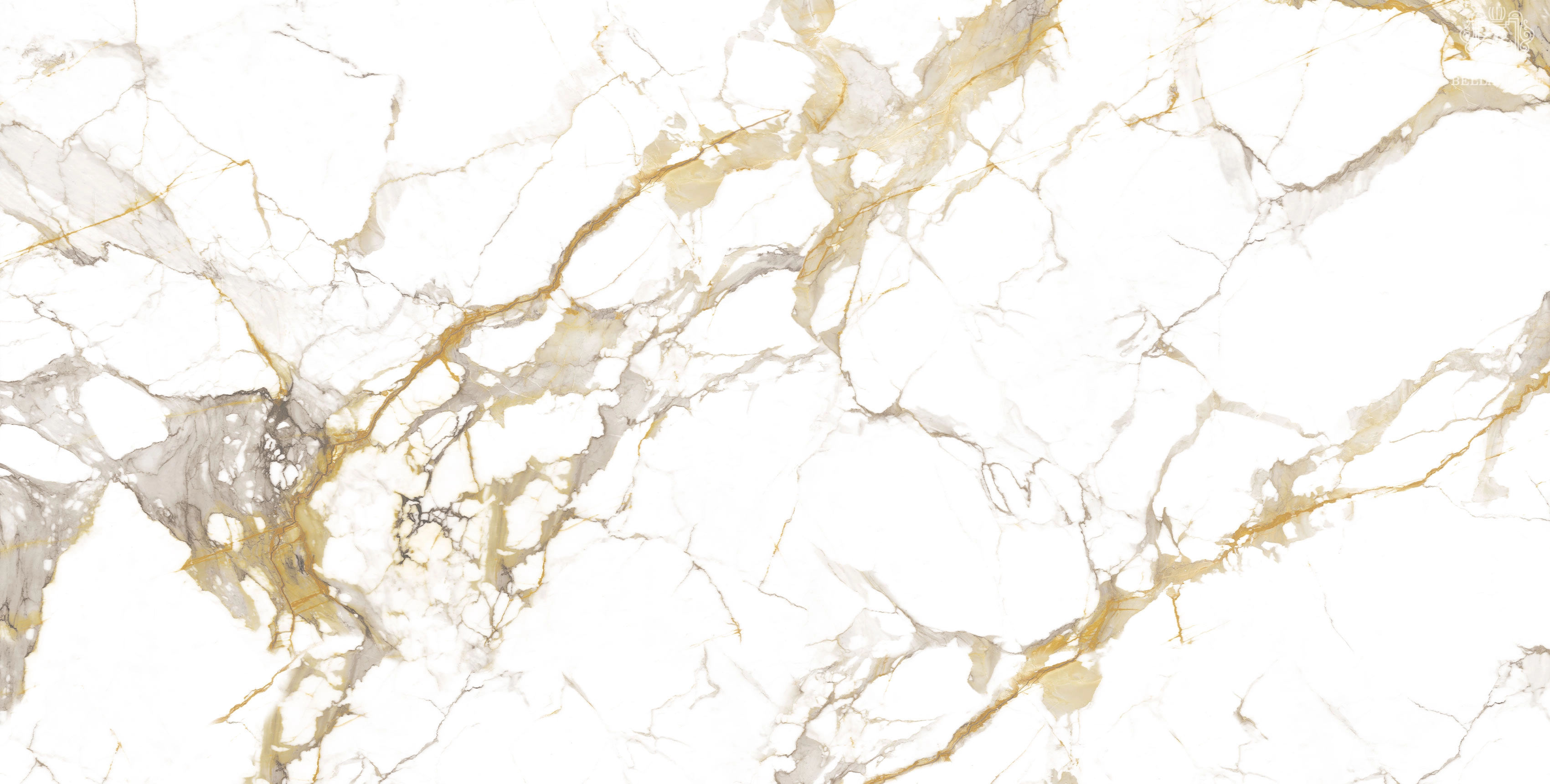
- 3) How can I match veining and gloss across seams on patterned white quartz so the seam becomes nearly invisible?
- 4) Which epoxy, adhesive or filler and what mixing/curing process produces the least visible seam on white quartz countertops?
- 5) What are realistic installation tolerances and seam gap widths that remain invisible after polishing and thermal movement?
- 6) When should I choose a mitered joint vs a butt seam for waterfall islands and how should each be executed to hide seams?
- Concluding summary: advantages of white quartz kitchen countertops
This post answers six highly specific questions beginners and trade professionals frequently ask when buying and installing white quartz kitchen countertops and quartz slabs. Each answer includes fabrication and installation steps, numeric tolerances, material recommendations and layout strategies to minimize seam visibility while meeting real-world manufacturing constraints.
1) How do I plan seam locations on a 10‑foot L-shaped white quartz countertop so seams aren’t obvious near the sink and cooktop?
Start with accurate templates and a full-scale layout mock-up. Key steps:
- Measure run lengths and confirm slab usable dimensions. Most engineered quartz slabs provide a usable panel of roughly 3050–3200 mm (120–126) long and 1400–1600 mm (55–63) wide. Plan seams where a single slab can’t cover the full run.
- Avoid locating seam junctions within 12–18 of primary focal points: the centerline of a farmhouse or undermount sink, the front edge of a freestanding range, or a window-facing work area. Human eyes default to these zones.
- Place seams behind appliances or at cabinet returns (backsplashes or toe kick transitions) when possible. On an L-shape, a 45° corner miter or a seam in the corner cabinet face is less visible than a straight seam across the work zone.
- For the area near the sink and cooktop: if you must have a seam, place it perpendicular to traffic and 6–12 to one side of the sink center so splashes and reflections help conceal the seam. Avoid seams that cross drainboards or bisect the sink plane.
- Dry-fit full-size layout with painter’s tape on the cabinets and plywood templates. This shows where seams interact with edge profiles, cabinet hardware and lighting—factors that change seam visibility dramatically.
- Collect slab usable dimensions from supplier (e.g., 3200 x 1600 mm). Record veining direction and repeat pattern to plan continuous visuals.
- Calculate panel yield: convert island top (length × width) and waterfall side heights into one flattened template. For a 12' island (144 × 36) with two 36 waterfall drops, you need a flattened length ~ (144 + 36 + 36) = 216 of linear material by 36 wide.
- Compare to slab length: a single 126 slab won’t cover 216. Options:
- Use two slabs and plan the seam at the island centerline down the middle or on the underside edge where a miter hides it.
- Design the island in two pieces joined with a mitered seam at the corner (mitred waterfall). A 45° mitered butt reduces the chances of a visible seam on waterfall edges by hiding the end grain and using matching edges.
- Minimize seams by switching layout: rotate slabs so the long dimension covers the island run; sometimes 3200 mm × 1600 mm slabs can be rotated to maximize continuous length for islands up to ~10–11 feet without seams, but for 12' islands expect at least one seam.
- Order an extra full slab for pattern matching and to allow for cutting waste—typical waste allowance is 10–15% for islands with veining and waterfall drops. For complex islands, budget 15%–20% waste.
- Select consecutive slabs from the same production lot and ask the supplier for slab pairings or “bookmatched” cuts where available. Bookmatching (mirrored cuts) can create continuity across a seam but requires precise cutting and extra slab yield.
- Plan vein flow during templating: mark vein direction, place seam across low-contrast areas (solid white or subtle texture) rather than across prominent veins, or align a vein to carry across the seam so the eye follows the pattern instead of the joint.
- Match finish: polished, honed, and leathered surfaces reflect light differently. A polished finish will reveal any slight elevation or color mismatch. If seams are unavoidable in a high‑gloss white quartz, consider a honed or satin finish to diffuse reflections and reduce perception of seam lines.
- Edge profile consistency: a continuous profile across adjoining pieces hides the seam better. If using a 3 cm top and 6 cm return, ensure both sides have identical edge profiling and finish polishing at the seam after adhesive cure.
- Use color‑matched epoxy with micro‑pigments. A skilled fabricator tints a two‑part clear epoxy to within the slab’s L*a*b* color tolerance. For patterned white quartz, small pigment additions (0.5–2% by resin weight) create a visually integrated seam filler. Always order a sample mock seam on offcuts to confirm match before final bonding.
- Use a two‑part, high‑viscosity epoxy specifically formulated for stone seams. Epoxies with good UV stability and low yellowing (aliphatic epoxy systems) are best for white backgrounds.
- Mixing ratios: follow manufacturer ratios by weight (commonly 100:20 or 100:30 resin:hardener). Weigh both components. Temperature affects cure and viscosity—ideal mixing temp is 20–25°C (68–77°F).
- Tinting: add micro‑pigments and/or powdered stone to the mixed epoxy. Add pigments slowly (0.5% increments) and test on scrap to reach an optical match. Adding too much filler alters cure and strength.
- Application technique:
- Dry-fit pieces and use clamps or silicone shims to maintain a uniform seam gap (0.5–1.0 mm recommended). A gap smaller than 0.5 mm often prevents adequate epoxy penetration; larger than 1.0 mm may show filler texture.
- Inject mixed epoxy into the seam from one end, using a syringe or caulk gun, then scrape excess after partial cure so final surface can be sanded and polished flush.
- Cure under recommended conditions. Post-cure heat (manufacturer recommends 40–60°C for a short cycle) can accelerate full cure and reduce amine blush on some systems.
- Finish: after cure, machine-sand in progressive grits and polish to match the slab gloss. For polished white quartz, the polishing stage is as important as filler color match—an unmatched sheen gives away a seam even if color is perfect.
- Typical fabricator seam tolerance target: 0.5–1.0 mm (0.02–0.04) before epoxy. After epoxy and finishing, the visible joint should be under 0.5 mm to appear nearly invisible in most lighting.
- Edge flatness tolerance: countertop faces should be flat within 1–2 mm across any 3' span. Uneven edges exaggerate seam thickness and reflection differences.
- Thermal movement: engineered quartz has a coefficient of thermal expansion (CTE) roughly 15–25 ×10^-6 /°C (approx 8.3–13.9 ×10^-6 /°F). For long runs, allow a 1/16–1/8 expansion gap at fixed walls or appliances concealed by splash or trim. Seams themselves are permanent bonded joints—design them in areas that won’t be forced into tension by expansion.
- Mechanical allowances: installers commonly leave 1/16–1/8 between the countertop and fixed wall cabinetry, covered with silicone. For seams between slabs, maintain a consistent gap and clamp to avoid squeezing out all epoxy; too thin and adhesion is compromised, too wide and filler will be visible.
- Butt seam (butted edge): two flat edges are joined with epoxy and then sanded/polished flush. Pros: lower slab yield, simpler. Cons: visible end grain at waterfall edges; more seam visibility if edge profile mismatch or slight height differences occur.
- Mitered joint (45° or custom angle): edges are cut at a matching mitre to form a continuous face around corners. Pros: hides end grain, creates a continuous look on waterfall sides, and conceals seam under edge profile. Cons: higher slab usage and requires very precise cutting and clamping; any mismatch in slab thickness/veneer pattern becomes obvious on exposed corners.
- Execution tips:
- For miters: use internal splines or biscuits (fiberglass or carbon fiber splines) for alignment beyond just epoxy. Fabricators often cut a slot and insert a mechanical spline for added shear strength before epoxy fills the joint.
- Control edge thickness and use identical edge profiling. A 20–30 mm support substrate behind the waterfall reduces flex and risk of seam separation.
- Polish the outer corner after bonding rather than relying on pre-polished edges; the polishing step blends the miter face and reduces optical breaklines.
- Recommendation: for waterfall islands where the visual continuous surface is critical, choose mitred joints and plan slab layout early (bookmatching, extra slabs). For budget constraints, use a butt seam located on the inner side of the island and combine with continuous veining and consistent finish to hide the joint.
Practical example: for a 10' (120) L run with a 30 sink base, using a slab 126 long lets you run one slab across most of the length and locate a seam at the return point of the L or at the near edge of an appliance rather than centered in front of the sink. Fabricators use CAD-to-CNC templates to ensure the seam falls exactly where planned.
2) What slab sizes and yield calculations help avoid seams on a 12‑foot island with waterfall ends?
Work from slab inventory and a yield calculation. Steps and numbers:
Bottom line: plan seams at island centerlines or beneath overhangs, use mitred joins for waterfall edges, and order slabs with enough length plus 10–20% overage for pattern matching and fabrication errors.
3) How can I match veining and gloss across seams on patterned white quartz so the seam becomes nearly invisible?
Vein alignment and finish are two of the most visible seam killers. Use these tactics:
Expect: for subtle-pattern whites, near-invisible seams are achievable. For bold veining, plan seams so they align with veins or fall in background areas; otherwise seams will remain visible despite epoxy matching.
4) Which epoxy, adhesive or filler and what mixing/curing process produces the least visible seam on white quartz countertops?
Choice of adhesive and technique is crucial. Recommended approach:
Note: use certified stone epoxies rather than generic adhesives. Ask your fabricator which epoxy brand they use and request a sample seam if color critical. Proper mixing, tinting, and polishing are more important than choosing the most expensive product.
5) What are realistic installation tolerances and seam gap widths that remain invisible after polishing and thermal movement?
Tolerance planning must cover both fabrication and in-service thermal expansion:
Summary: specify a pre‑bond seam gap of 0.5–1.0 mm, maintain flatness across runs, and allow small expansion gaps to non‑bonded fixed points. Reliable fabricators will state their tolerance and show a joint mock‑up before final installation.
6) When should I choose a mitered joint vs a butt seam for waterfall islands and how should each be executed to hide seams?
Choice depends on slab quantity, edge thickness and aesthetic priority:
In all cases, a professional fabricator should mock up the joint and provide a sample to verify the final appearance before committing to final cuts.
Concluding summary: advantages of white quartz kitchen countertops
White quartz kitchen countertops offer durable, non-porous surfaces resistant to staining, uniform color and pattern repeatability, and low maintenance compared with natural stone. Engineered quartz provides consistent slabs that allow predictable planning for seam placement and veining alignment. When combined with careful slab selection, precise templating, color‑matched epoxy, and appropriate edge or miter techniques, seams can be made minimally visible while delivering a hygienic, long‑lasting finish ideal for modern kitchens.
To get a tailored seam plan and a formal quote for your white quartz project, contact us for a layout consultation and sample mock‑up: www.gdbellastone.com or info@gdbellastone.com.


FAQ
What is the minimum order quantity?
Minimum order quantity: 30 pieces.
Which is more expensive, artificial quartz stone or natural stone?
If we only consider the purchase price per square meter, artificial quartz stone is usually more expensive than ordinary granite but cheaper than top-grade marble. However, considering the total cost over the long term, the cost-effectiveness of durable artificial quartz stone that requires no maintenance may be higher; whereas marble, which requires regular professional maintenance, may be more expensive in terms of long-term total expenditure.
Care & Maintenace
How do I clean my quartz surface daily?
Simply use a soft cloth or sponge with mild soap and warm water. Avoid abrasive pads or harsh chemicals to maintain surface shine.
Can I cut food directly on the quartz surface?
While the surface is scratch-resistant, we recommend using a cutting board to protect both the quartz and your knives.
Printed Artificial Quartz Stone
Can I customize patterns or colors?
Yes. BELLASTONE offers customized printed designs, colors, and slab specifications for OEM and project orders.





Whether you're exploring design trends or planning your next build, our team is here to support with product advice, pricing, and tailored solutions.
Rest assured that your privacy is important to us, and all information provided will be handled with the utmost confidentiality.
By clicking "Send Inquiry Now", I agree to your processing my personal data.
To see how to withdraw your consent, how to control your personal data, and how we process it, please see our Privacy Policy and Terms of Use.
Bellastone, Premium Quartz Manufacturer & Exporter
© 2025 BELLASTONE. All Rights Reserved. | Privacy Policy | Terms and Conditions | Sitemap
Facebook
Linkedin
YouTube