



How to choose between honed and polished Calacatta quartz?
- Calacatta Quartz Countertops: A Comprehensive Guide
- 1. What is Calacatta Quartz?
- 2. What are the Benefits of Choosing Calacatta Quartz?
- 3. How Does Calacatta Quartz Compare to Natural Marble?
- 4. What Are the Different Finishes Available for Calacatta Quartz?
- 5. How Do I Choose Between Honed and Polished Finishes?
- 6. Where Can I Use Calacatta Quartz in My Home?
- 7. How Do I Maintain Calacatta Quartz Countertops?
- 8. What Are the Cost Considerations for Calacatta Quartz?
- Conclusion: Why Choose BELLASTONE for Your Calacatta Quartz Countertops?
Calacatta Quartz Countertops: A Comprehensive Guide
Calacatta quartz countertops have become a popular choice for homeowners and designers seeking the luxurious appearance of marble combined with the durability and low maintenance of quartz. In this guide, we'll address common questions and provide insights to help you make an informed decision when selecting Calacatta quartz for your space.
1. What is Calacatta Quartz?
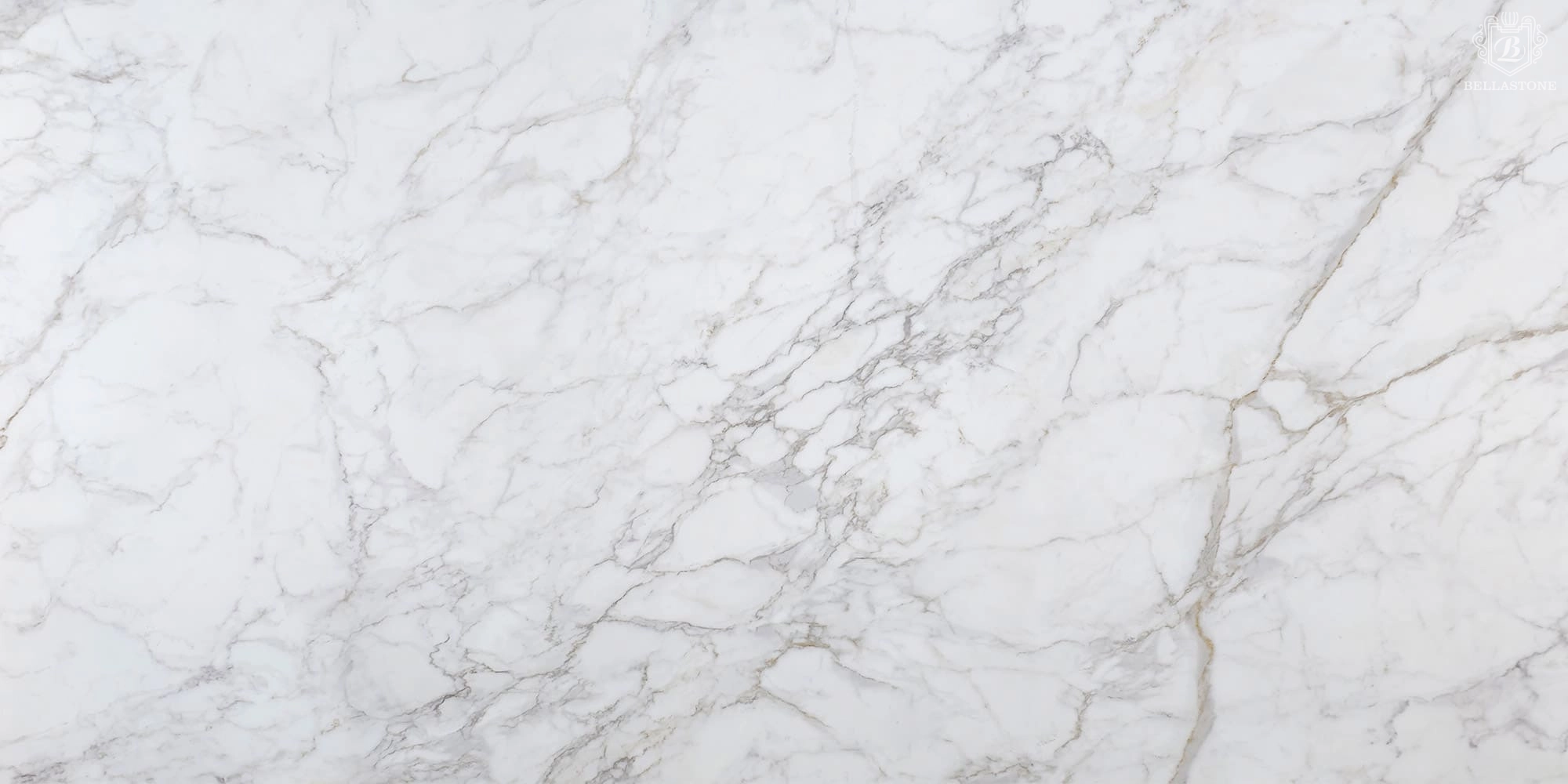
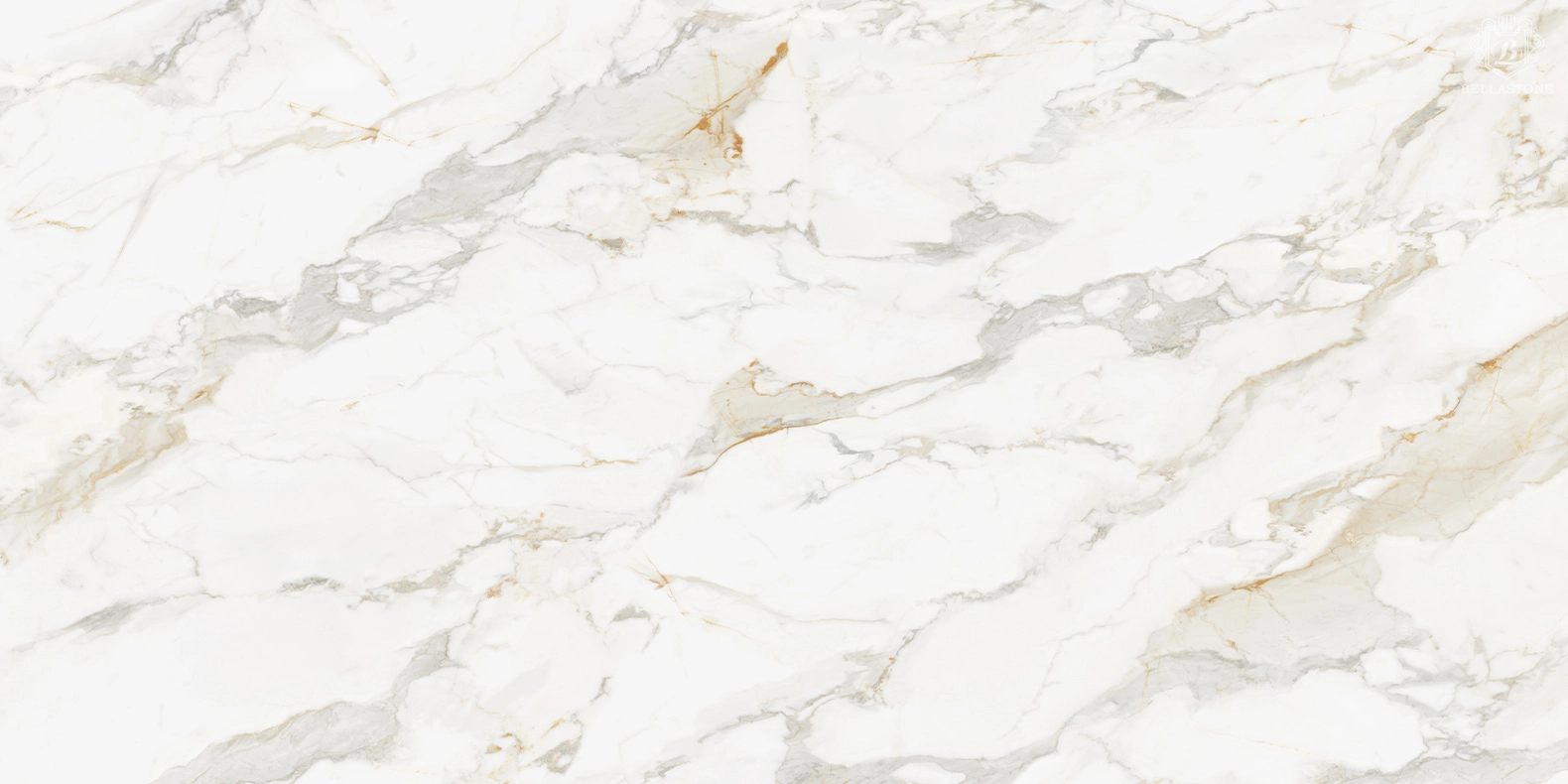
Calacatta quartz is an engineered stone designed to mimic the appearance of natural Calacatta marble. It features a bright white background with striking veins, offering a sophisticated aesthetic without the maintenance challenges associated with natural marble.
2. What are the Benefits of Choosing Calacatta Quartz?
Durability: Calacatta quartz is non-porous, making it resistant to stains and scratches. Unlike natural marble, it doesn't require sealing, ensuring a long-lasting surface.
Low Maintenance: Daily cleaning is straightforward, requiring only mild soap and water. Its resistance to stains from wine, coffee, and other common spills makes it ideal for kitchens and bathrooms.
Consistent Appearance: Engineered quartz offers uniform color and veining patterns, ensuring a cohesive design across large surfaces.
3. How Does Calacatta Quartz Compare to Natural Marble?
| Feature | Calacatta Quartz
| Natural Marble |||||| Maintenance | No sealing required; easy daily cleaning| Requires professional sealing every 1-2 years; more prone to staining and etching || Durability | Highly resistant to stains and scratches| Softer and more porous; susceptible to scratches and stains || Heat Resistance | Sensitive to extreme direct heat; requires trivets| Naturally heat-resistant
|| Appearance | Consistent patterns across slabs
| Natural variation; slabs differ dramatically | |
|---|---|
| Cost (Installed) | $75-150 per square foot |
| $180-300+ per square foot | 4. What Are the Different Finishes Available for Calacatta Quartz?
Calacatta quartz countertops are available in various finishes, each offering distinct aesthetics and maintenance requirements:
Polished Finish: Provides a glossy, reflective surface that enhances the depth of the veining. It's easy to clean but may show fingerprints and water spots more readily.
Honed Finish: Offers a matte, non-reflective surface with a soft, smooth feel. While it hides fingerprints and water spots better, it may be more susceptible to staining and requires regular sealing.
5. How Do I Choose Between Honed and Polished Finishes?
Consider the following factors when deciding between honed and polished finishes:
Aesthetic Preference: Polished finishes offer a shiny, sophisticated look, while honed finishes provide a more understated, matte appearance.
Maintenance: Polished surfaces are easier to clean and maintain but may show imperfections more easily. Honed surfaces require more upkeep to prevent staining but are less likely to show water spots and fingerprints.
Durability: Both finishes are durable, but honed surfaces may be more susceptible to staining and require regular sealing.
6. Where Can I Use Calacatta Quartz in My Home?
Calacatta quartz is versatile and can be used in various applications:
Kitchen Countertops and Islands: Adds elegance and functionality to cooking and entertaining spaces.
Bathroom Vanities and Backsplashes: Provides a luxurious look with easy maintenance in wet areas.
Fireplace Surrounds: Creates a striking focal point in living areas.
Home Bars and Entertainment Areas: Offers a stylish and durable surface for hosting guests.
7. How Do I Maintain Calacatta Quartz Countertops?
Maintaining Calacatta quartz is straightforward:
Daily Cleaning: Wipe with a soft cloth and mild soap solution.
Avoid Harsh Chemicals: Refrain from using abrasive cleaners or harsh chemicals that can damage the surface.
Use Cutting Boards and Trivets: Protect the surface from scratches and heat damage by using appropriate tools.
8. What Are the Cost Considerations for Calacatta Quartz?
The cost of Calacatta quartz varies based on factors such as brand, design complexity, and slab size. On average, installed prices range from $75 to $150 per square foot, making it a more affordable option compared to natural marble, which can cost $180 to $300+ per square foot.
Conclusion: Why Choose BELLASTONE for Your Calacatta Quartz Countertops?
BELLASTONE offers a wide selection of high-quality Calacatta quartz countertops that combine elegance with durability. Our products are engineered to provide consistent patterns and colors, ensuring a cohesive design for your space. With a focus on customer satisfaction, BELLASTONE provides expert guidance to help you choose the perfect finish and design to suit your needs.
References:


Printed Artificial Quartz Stone
What is printed quartz stone?
Printed quartz stone is an engineered quartz slab with high-definition printed surface patterns that simulate natural stone aesthetics while maintaining quartz performance.
Is printed quartz durable enough for countertops?
Yes. Printed quartz slabs maintain the same core strength as standard engineered quartz and are suitable for kitchen and bathroom countertops.
Care & Maintenace
Can I cut food directly on the quartz surface?
While the surface is scratch-resistant, we recommend using a cutting board to protect both the quartz and your knives.
FAQ
Can it be made into a finished product?
Yes, we support customization and installation.
How does quartz stone compare to natural marble?
Durability: Higher hardness (Mohs scale 7 vs. marble 3-5),
Stronger resistance to scratching and impact
Stability: It has almost zero water absorption rate, with no risk of infiltration or discoloration, while marble requires regular sealing and maintenance
Consistency: The color and texture are controllable, without obvious color differences and flaws found in natural stone materials
Hygienic: Compact and non-porous surface, antibacterial and mold-resistant, easy to clean, meets food contact safety standards
Economical: low long-term maintenance costs, longer service life, and better overall cost-effectiveness


Whether you're exploring design trends or planning your next build, our team is here to support with product advice, pricing, and tailored solutions.
Rest assured that your privacy is important to us, and all information provided will be handled with the utmost confidentiality.
By clicking "Send Inquiry Now", I agree to your processing my personal data.
To see how to withdraw your consent, how to control your personal data, and how we process it, please see our Privacy Policy and Terms of Use.
Bellastone, Premium Quartz Manufacturer & Exporter
© 2026 BELLASTONE. All Rights Reserved. | Privacy Policy | Terms and Conditions | Sitemap
Facebook
Linkedin
YouTube