



Concrete Quartz Slab vs Natural Stone: Durability Compared
- Introduction: Why compare Concrete Quartz Slab vs Natural Stone: Durability Compared
- Why this durability comparison matters for buyers
- What are Concrete-look Quartz Slabs and Natural Stone?
- Concrete-look engineered quartz: composition and production
- Natural stone: granite, marble and other options
- Key durability factors: Concrete Quartz Slab vs Natural Stone: Durability Compared
- Hardness and scratch resistance
- Porosity and stain resistance
- Heat resistance and thermal shock
- Impact, flexural strength and cracking
- UV/light exposure and color stability
- Repairability and long-term maintenance
- Side-by-side durability comparison table
- How to choose: Practical recommendations
- Best use cases for concrete-look quartz slabs
- Best use cases for natural stone
- Bellastone perspective: engineered quality and real-world performance
- Why manufacturers like Guangdong Bellastone favor engineered concrete textures
- Conclusion: Which wins the durability comparison?
- Summary verdict based on use-case
- Frequently Asked Questions
- Sources and references
Introduction: Why compare Concrete Quartz Slab vs Natural Stone: Durability Compared
Why this durability comparison matters for buyers
When selecting surfacing for kitchens, bathrooms, or commercial projects, durability is often the top priority. The keyword Concrete Quartz Slab vs Natural Stone: Durability Compared signals a buyer intent to understand long-term performance differences—resistance to scratches, stains, heat, impact, and maintenance needs—so they can pick the right material for their use case. This article explains those differences clearly and objectively, with practical recommendations for homeowners, designers, and specifiers.
What are Concrete-look Quartz Slabs and Natural Stone?
Concrete-look engineered quartz: composition and production
Concrete-look quartz slabs are engineered stone products that replicate the visual texture and tones of poured concrete while using manufactured composition for consistent performance. Typical engineered quartz contains around 85–95% natural quartz or silica aggregates bound with 5–15% polymer resins, pigments and additives. The resin matrix and compact manufacturing make these slabs virtually non-porous and highly uniform—features that drive their popularity for indoor countertops and vertical surfaces.
Natural stone: granite, marble and other options
Natural stone refers to quarried materials such as granite, marble, soapstone, limestone and slate. Each stone has distinct mineralogical and physical properties. Granite is an igneous rock with interlocking crystals that usually delivers excellent hardness and low porosity. Marble is metamorphosed limestone composed largely of calcite, which is softer and more susceptible to acid etching and staining. Natural stone varies by quarry and slab, so performance is less uniform than engineered quartz.
Key durability factors: Concrete Quartz Slab vs Natural Stone: Durability Compared
Hardness and scratch resistance
Hardness is commonly measured by the Mohs scale. Quartz minerals rate about 7 on Mohs, so engineered quartz typically delivers high scratch resistance, roughly comparable to granite (typically 6–7) and superior to marble (about 3–4). In practice, concrete-look quartz slabs resist everyday knife and utensil contact well, while marble requires more care to avoid scratches and etches.
Porosity and stain resistance
Engineered quartz is essentially non-porous because polymer resins fill the matrix; this makes it highly stain-resistant to common household substances (wine, coffee, oils). Natural stone porosity varies: granite is generally low-porosity but may still absorb stains if not sealed; marble and limestone are more porous and require regular sealing to maintain stain resistance.
Heat resistance and thermal shock
Natural granite withstands direct heat better than resin-based surfaces—an advantage for hot pans—though sudden extreme temperature changes can still cause cracking. Engineered quartz can tolerate daily cooking temperatures but polymer components make it more sensitive to very high, localized heat; manufacturers typically recommend using trivets or hot pads. For outdoor applications with sustained sunlight and high temperatures, select materials rated for UV exposure and thermal cycling.
Impact, flexural strength and cracking
Because engineered quartz includes polymers, it often has greater flexural toughness and is less brittle under point loads than some natural stones. However, very heavy impact or improper installation can cause chips or cracks in either material. Concrete countertops (actual cast concrete) can be prone to hairline cracking if not reinforced; concrete-look quartz avoids that because it is engineered on controlled production lines.
UV/light exposure and color stability
Natural stones generally retain color outdoors (granite and some marbles are UV stable). Some engineered quartz products may fade or discolor if exposed to direct sunlight for prolonged periods, depending on resin and pigment formulations. For outdoor counter or cladding projects choose UV-resistant formulations or natural stone.
Repairability and long-term maintenance
Minor surface scratches and chips in engineered quartz can sometimes be repaired by sanding and polishing by a professional, though color-matching resin can be challenging. Natural stone can often be honed, repolished and re-sealed, which restores appearance effectively for granite and many marbles. Regular maintenance for quartz is typically lower—no sealing is needed—whereas natural stone usually benefits from periodic sealing and more careful cleaning routines.
Side-by-side durability comparison table
| Attribute | Concrete-look Engineered Quartz | Natural Stone (Granite / Marble) |
|---|---|---|
| Composition | ~85–95% quartz/silica + 5–15% resins & pigments | Natural mineral rock; composition varies by type and quarry |
| Mohs Hardness (typical) | ~6–7 (high scratch resistance) | Granite ~6–7; Marble ~3–4 |
| Porosity / Stain Resistance | Non-porous; excellent stain resistance; no sealing required | Granite: low porosity but benefits from sealing; Marble: higher porosity, more stain-prone |
| Heat Resistance | Good for everyday use; avoid direct hot pans; limited by resin | Granite: very good; Marble: moderate but vulnerable to etching |
| Impact / Flexural Strength | High toughness due to resin; less brittle under shock | Granite: strong but can chip; Marble: softer, chips more easily |
| UV / Outdoor Use | Some formulations may discolor outdoors (check UV rating) | Natural stones typically UV stable when properly finished |
| Maintenance | Low maintenance; non-porous; mild cleaners | Periodic sealing and tailored cleaners recommended |
| Typical Lifespan | Many decades with proper care; consistent appearance | Can last generations; appearance may change with wear and maintenance |
How to choose: Practical recommendations
Best use cases for concrete-look quartz slabs
If your priority is low maintenance, consistent appearance, stain resistance, and a modern concrete aesthetic, a concrete-look engineered quartz slab is an excellent choice for kitchens, bathrooms, islands, and commercial counters. It works best indoors and in areas where uniformity and hygiene are important—restaurants, hospitality, and medical settings benefit from the non-porous surface.
Best use cases for natural stone
Choose natural stone—particularly granite—if you need superior heat tolerance, natural variation, and long-term patina. Granite is preferred for areas where hot cookware may be placed directly and for outdoor cladding where UV stability is needed. Marble remains a top aesthetic choice for luxury baths and surfaces where the owner is willing to accept higher maintenance and gentle use.
Bellastone perspective: engineered quality and real-world performance
Why manufacturers like Guangdong Bellastone favor engineered concrete textures
At Guangdong Bellastone Green Building Material Co., Ltd., we produce concrete-texture quartz slabs that combine the industrial look of poured concrete with engineered advantages—stable colors, low porosity, and factory-controlled quality. With 10 years of R&D and three advanced production lines operating across our 30,000 sqm facility in Jiangmen, our concrete-look collections aim to deliver both the desired aesthetic and the durability clients expect for kitchens, bathrooms, and commercial projects.
Conclusion: Which wins the durability comparison?
Summary verdict based on use-case
For most indoor surfaces—kitchens and bathrooms—concrete-look engineered quartz slabs offer superior everyday durability because they are non-porous, stain-resistant and require less maintenance. If your priority is heat tolerance, outdoor exposure, or you want a natural, one-of-a-kind slab, granite (a natural stone) may be more appropriate. Marble prioritizes beauty over rugged durability and needs more careful maintenance. In short: choose engineered quartz for consistent, low-maintenance performance; choose granite for superior natural heat resistance and outdoor suitability; choose marble when aesthetics outweigh durability concerns.
Frequently Asked Questions
Are concrete-look quartz slabs truly non-porous and stain-proof?Engineered quartz is effectively non-porous compared with natural stone and resists most household stains without sealing. However, avoid prolonged exposure to concentrated solvents and clean spills promptly for best results.
Can you place hot pans directly on quartz or granite?Granite tolerates higher direct heat better than quartz; however, using trivets or hot pads is recommended for both materials to prevent thermal damage or resin discoloration and to protect sealants on natural stone.
Which material is better for outdoor kitchens?Natural stone such as granite is generally preferred for outdoor use because of UV stability and thermal resilience. If selecting engineered quartz outdoors, choose products specifically formulated and tested for UV exposure.
How easy is it to repair chips and scratches?Minor chips and scratches in both quartz and natural stone can be repaired by professionals. Granite and other natural stones can be repolished to restore finish. Color-matching resin repairs on quartz require expertise to blend seamlessly.
Do I need to seal engineered quartz or natural stone?Engineered quartz does not require sealing. Most natural stones, especially marble and some granites, benefit from regular sealing to reduce staining and simplify maintenance.
Sources and references
- Natural Stone Institute — technical resources and stone care guidance
- Manufacturers' technical data for engineered quartz (industry standards from leading quartz brands)
- Mohs Hardness scale — mineral hardness reference
- Architectural and construction materials literature on cement/concrete countertops and reinforcement practices
- Industry installation guides and care instructions for engineered quartz and natural stone
For project-specific advice or samples of concrete-look quartz slabs, Guangdong Bellastone Green Building Material Co., Ltd. invites architects, designers, and buyers to visit our CCIH Foshan showroom or contact our technical team for specifications and testing data tailored to your application.
Template and measurement standards for quartz tops
Calacatta Quartz for Backsplashes: Ideas 2026

Fabrication Tips for Carrara White Quartz Slabs in Projects

How Printed Quartz Patterns Enhance Modern Kitchen Design
Care & Maintenace
How do I clean my quartz surface daily?
Simply use a soft cloth or sponge with mild soap and warm water. Avoid abrasive pads or harsh chemicals to maintain surface shine.
How do I remove stubborn stains or dried spills?
Use a non-abrasive household cleaner or a mixture of vinegar and water. For dried spills, gently scrape with a plastic putty knife.
FAQ
Is quartz countertop durable?
Excellent physical properties, sturdy and wear-resistant
Key advantages in daily use: scratch resistance, stain resistance, and high temperature resistance
It stands out more in terms of durability compared to common countertop materials such as natural marble and granite
No special maintenance is required, and it is easy to clean. With normal use and maintenance, its aesthetics and functionality can be maintained for decades.
How does quartz stone compare to natural marble?
Durability: Higher hardness (Mohs scale 7 vs. marble 3-5),
Stronger resistance to scratching and impact
Stability: It has almost zero water absorption rate, with no risk of infiltration or discoloration, while marble requires regular sealing and maintenance
Consistency: The color and texture are controllable, without obvious color differences and flaws found in natural stone materials
Hygienic: Compact and non-porous surface, antibacterial and mold-resistant, easy to clean, meets food contact safety standards
Economical: low long-term maintenance costs, longer service life, and better overall cost-effectiveness
What scenarios is it applicable to?
Kitchen countertops and island tops, bathroom vanity tops, wall decorations and feature walls, commercial interior design, restaurants and public buildings, residential renovation projects.
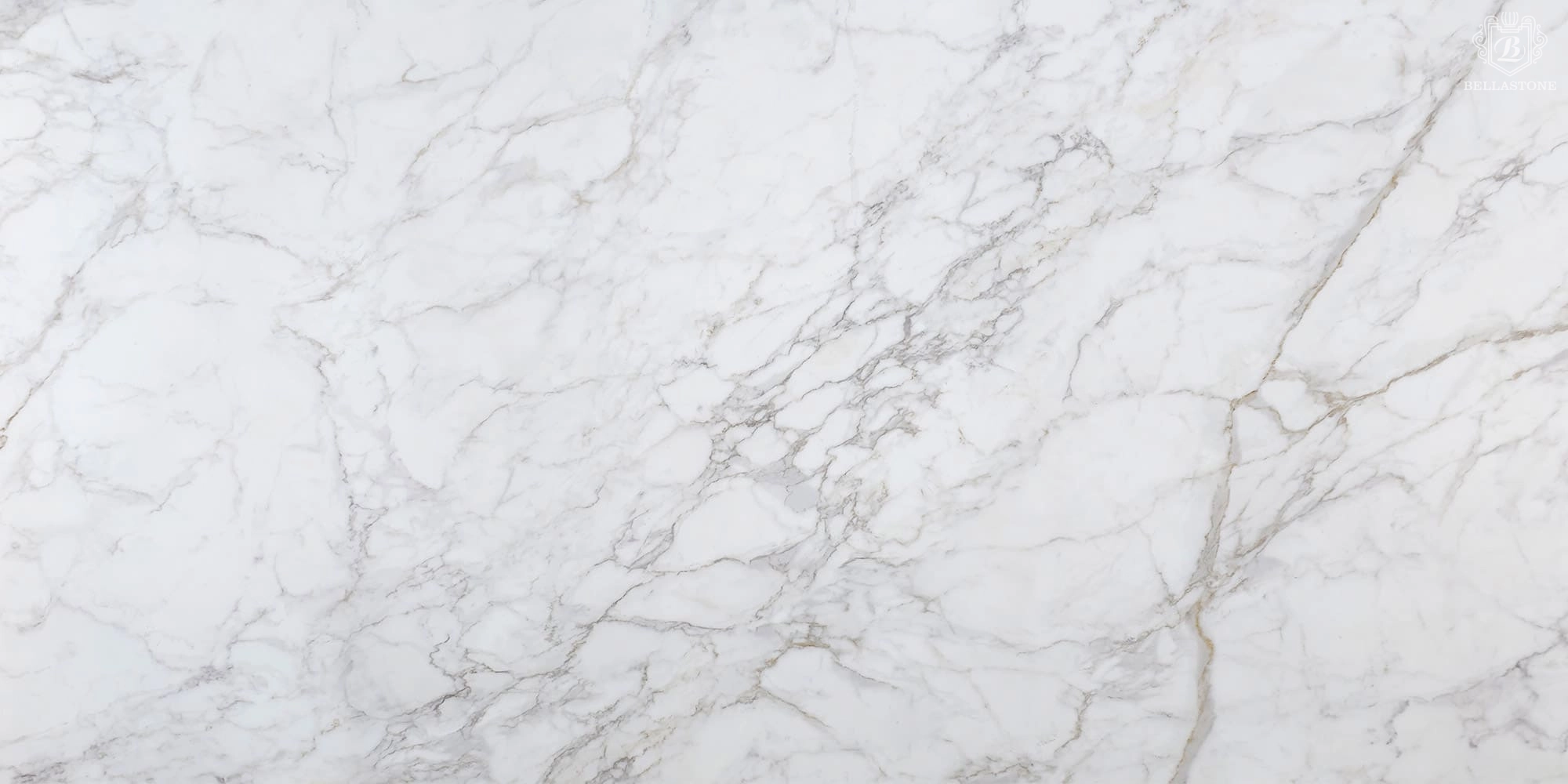
BELLASTONE Artificial Quartz Stone Printed Quartz Collection
Taking inspiration from the wave marks of snow-capped mountains, the white base is embellished with natural gray patterns, resembling the freehand layering of wind-eroded ice rocks.
The soft light texture replicates the texture of the original stone, with undulating textures resembling an eternal dialogue between ridges and waves. The high hardness and anti-pollution structure are suitable for kitchen and bathroom countertops and background walls, capturing the flowing poetry of natural power in minimalism.
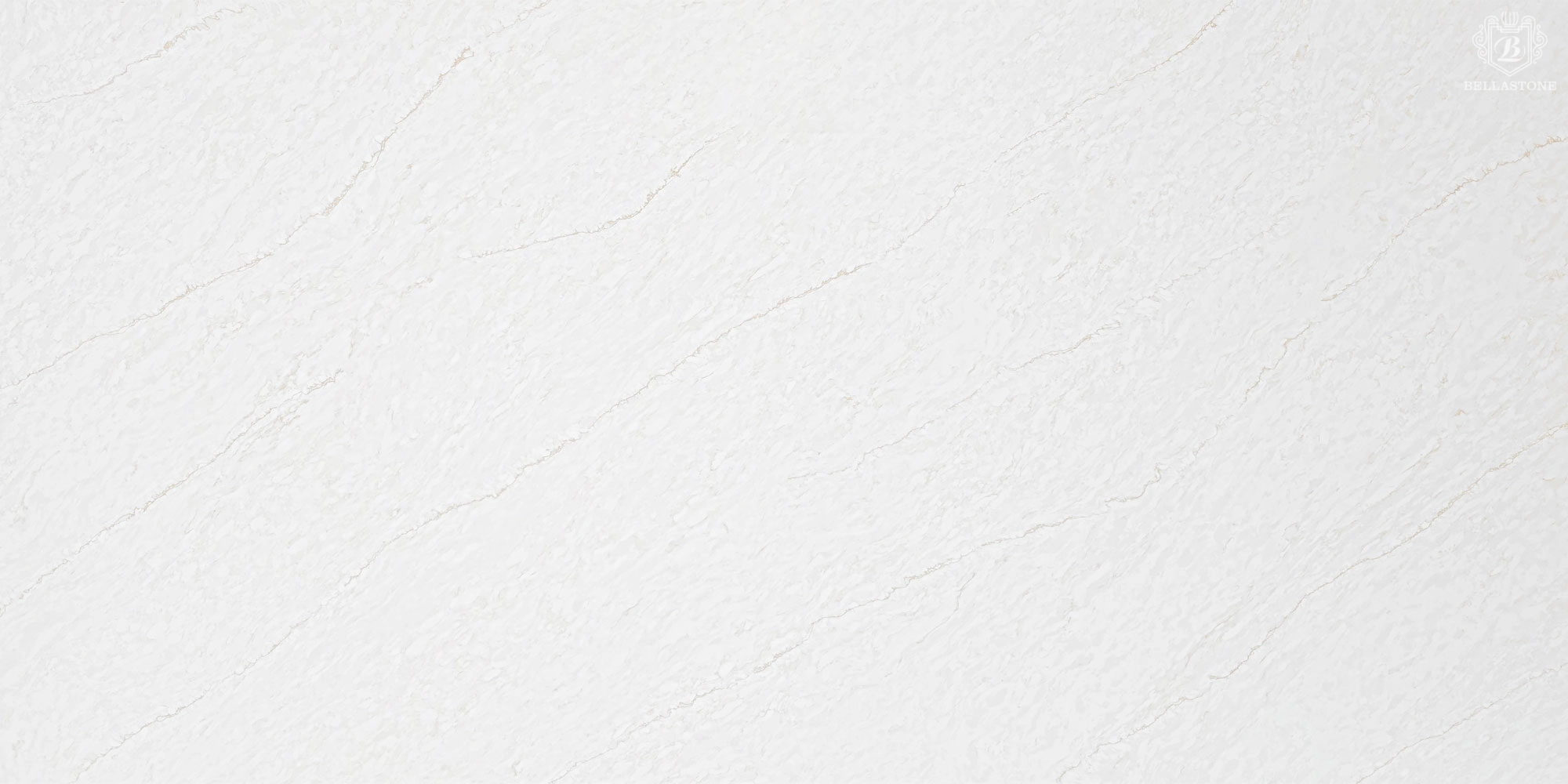
Bellastone Artificial Quartz Stone New Collection - BL8811 Taj Ivory
Taking inspiration from the ivory white of the Taj Mahal, the pure base is inlaid with light golden lines, like the gentle trajectory of the morning sun passing over the palace.
Exquisite texture replicated natural stone veins, with a soft and luxurious texture blended on the surface. The anti pollution and wear-resistant structure is suitable for high-end countertops and background walls, injecting eternal and sacred Eastern poetry into the space.

BELLASTONE Artificial Quartz Stone Printed Quartz Collection - BL5009 Rockwell
Deep grey tones form the base, with white veins elegantly diffused like an ink wash painting. The surface is flawlessly smooth and even. Combining the aesthetic appeal of natural stone with the superior durability of quartz, it is wear-resistant and easy to clean—perfect for infusing modern elegance into kitchens and bathrooms.
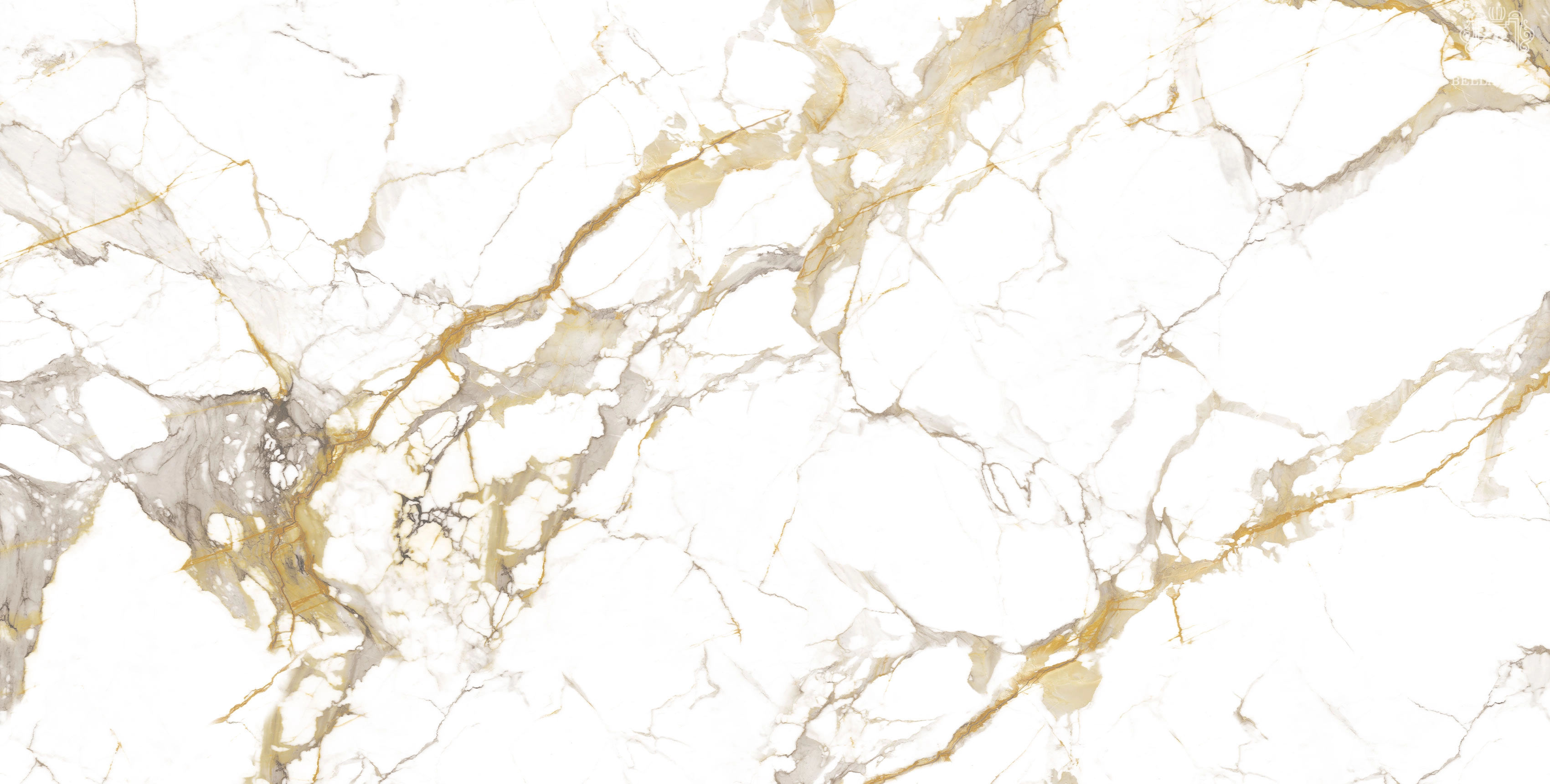
BELLASTONE Artificial Quartz Stone Printed Quartz Collection - BL5814 Ages Gilded
The soft light texture replicates the texture of the original stone, with undulating textures resembling an eternal dialogue between ridges and waves. The high hardness and anti-pollution structure are suitable for kitchen and bathroom countertops and background walls, capturing the flowing poetry of natural power in minimalism.

BELLASTONE Artificial Quartz Stone Printed Quartz Collection - BL5027 Golden Velvet
A pristine, snow-white canvas is elegantly brushed with flowing gold veins, creating a poetic blend of luxury and dynamism. The glazed-smooth surface offers scratch resistance, durability, and stain protection, making it ideal for kitchen countertops, bathroom accents, and beyond. With minimalist elegance, it defines modern sophistication and imbues spaces with timeless artistic charm.

BELLASTONE Artificial Quartz Stone Printed Quartz Collection - BL5806 Woven Time
The soft light texture replicates the texture of the original stone, with undulating textures resembling an eternal dialogue between ridges and waves. The high hardness and anti-pollution structure are suitable for kitchen and bathroom countertops and background walls, capturing the flowing poetry of natural power in minimalism.

BELLASTONE Artificial Quartz Stone Printed Quartz Collection - BL5018 Lamia
Crafted with a base as pure as winter's first snow, graceful grey veins meander like flowing streams, adorned with scattered golden lines reminiscent of starlight from the galaxy. The mirror-smooth surface seamlessly blends natural elegance with modern technology. Scratch-resistant, stain-proof, and easy to maintain, it elevates kitchens, countertops, and spaces with high-end artistry, embodying the light luxury and sophistication of contemporary home aesthetics.

Bellastone Artificial Quartz Stone New Collection - BL8804 Verdant
Taking inspiration from panda elements, the ink texture on the snow-white base naturally wanders, resembling the freehand paw prints of a young bear stepping on the first snow.
Soft texture replicated on Xuan paper, with a glossy surface infused with the charm of Eastern ink wash. The high hardness and zero permeability structure is suitable for kitchen island countertops and tea room countertops, condensing eternal black and white poetry with contemporary design language.
Whether you're exploring design trends or planning your next build, our team is here to support with product advice, pricing, and tailored solutions.
Rest assured that your privacy is important to us, and all information provided will be handled with the utmost confidentiality.
By clicking "Send Inquiry Now", I agree to your processing my personal data.
To see how to withdraw your consent, how to control your personal data, and how we process it, please see our Privacy Policy and Terms of Use.
Bellastone, Premium Quartz Manufacturer & Exporter
© 2025 BELLASTONE. All Rights Reserved. | Privacy Policy | Terms and Conditions | Sitemap
Facebook
Linkedin
YouTube