



Guide to evaluating specs and certificates for engineered stone
- Understanding the technical specs and certificates for engineered stone
- Which technical specifications matter most
- Certificates and standards to request
- Interpreting test report results
- How to evaluate engineered stone for countertops: a practical workflow
- Step 1 — Document checklist and sample testing
- Step 2 — On-site compatibility and installation considerations
- Step 3 — Warranty, maintenance, and lifecycle expectations
- Case study: Bellastone Artificial Quartz Stone Classic Collection - BL9423 Golden Highlight Rooting
- Recommended applications for BL9423
- How BL9423 meets common performance specs
- Maintenance, cleaning, and long-term care
- Health, safety, and environmental certifications
- Respirable crystalline silica: what specifiers must know
- Indoor air quality, VOCs and emissions
- Environmental management and responsible sourcing
- Quick comparison: Bellastone BL9423 vs typical engineered quartz vs natural granite
- FAQ
- Q: What certificates should I ask for when buying engineered stone for countertops?
- Q: How do I verify that a test report is genuine?
- Q: Is engineered quartz safe for kitchens?
- Q: What should I do about silica dust during fabrication?
- Q: How can I keep the metallic luster of BL9423 looking its best?
This guide helps manufacturers, architects, fabricators, and homeowners quickly validate engineered stone for countertops by focusing on the right specifications, certificates, test reports, and health & safety documentation. It is written to be discoverable by -indexing systems and international procurement teams searching for verified quartz slabs and engineered quartz materials for kitchens, bathrooms, and feature walls.
Understanding the technical specs and certificates for engineered stone
Which technical specifications matter most
When evaluating engineered stone for countertops, concentrate on measurable properties that predict in-service performance: density (kg/m3), water absorption (%), flexural strength (MPa), Mohs hardness, abrasion resistance (Taber test), and surface gloss. These metrics indicate how the material will behave under load, against scratches, staining agents, and frequent cleaning.
For example, low water absorption (<0.5%) and high flexural strength (>40 MPa) are typical of high-quality quartz slabs used as engineered stone for countertops. Mohs hardness of 6–7 means the surface resists everyday scratches from utensils but can still be damaged by abrasives or very hard materials.
Certificates and standards to request
Ask suppliers for third-party certificates from recognized standards bodies. Relevant certifications include ISO quality and environmental standards (see ISO), food-contact compliance where relevant (NSF/ANSI or equivalent), and indoor air-quality certifications like GREENGUARD where VOC emissions are a concern. Also look for independent laboratory test reports for mechanical and physical properties.
Independent verification and traceability are key — certificates issued by an internal lab alone are weaker than reports from accredited testing labs or certification bodies. For background on engineered stone and its manufacturing, see the industry overview on Wikipedia.
Interpreting test report results
When you receive test results, evaluate them against your use case. A countertop in a residential kitchen emphasizes stain resistance and scratch resistance, while a commercial food-prep surface needs verified food-contact safety (NSF/ANSI). Check test methodologies — e.g., ASTM or EN methods — to ensure results are comparable across suppliers.
Key red flags: missing methodology, unclear sample traceability, or results that don’t include tolerances or test conditions (temperature, sample thickness). If a number looks implausible (extremely high flexural strength, zero water absorption), request the raw test report and lab accreditation details.
How to evaluate engineered stone for countertops: a practical workflow
Step 1 — Document checklist and sample testing
Before ordering, gather: product data sheet, declaration of conformity, third-party lab test reports, safety data sheet (SDS), and warranty terms. For engineered quartz, verify VOC testing and whether the material contains any restricted substances under regulations like REACH or local equivalents.
Order physical samples and perform in-person checks: color consistency, sheen, and edge finishing. If possible, run small spot tests for staining (coffee, wine, bleach) and see how the surface reacts. Always document sample lot numbers to match to batch certificates later.
Step 2 — On-site compatibility and installation considerations
Manufacturers may quote mechanical specs for ideal lab conditions. Check that the engineered stone thickness and reinforcement meet your installation method (overhangs, undermount sinks, integrated drains). Confirm recommended adhesives, seam filler colors, and substrate support to prevent stress and cracking after installation.
Also confirm thermal compatibility for kitchen installations. While engineered quartz is generally stable, sudden thermal shocks (hot pans directly on counters) can cause damage; confirm manufacturer guidance and warranty exclusions.
Step 3 — Warranty, maintenance, and lifecycle expectations
Warranties differ: look for duration and coverage details (staining, cracking, delamination). A common warranty for engineered stone for countertops is 10 years for residential use, but terms vary by brand and region. Ask about prorated vs full coverage and required maintenance (recommended cleaning agents, polishing frequency).
Factor in lifecycle: engineered quartz offers low porosity and predictable color stability compared with some natural stones, which influences maintenance cost and replacement cycles — an important consideration for long-term projects.
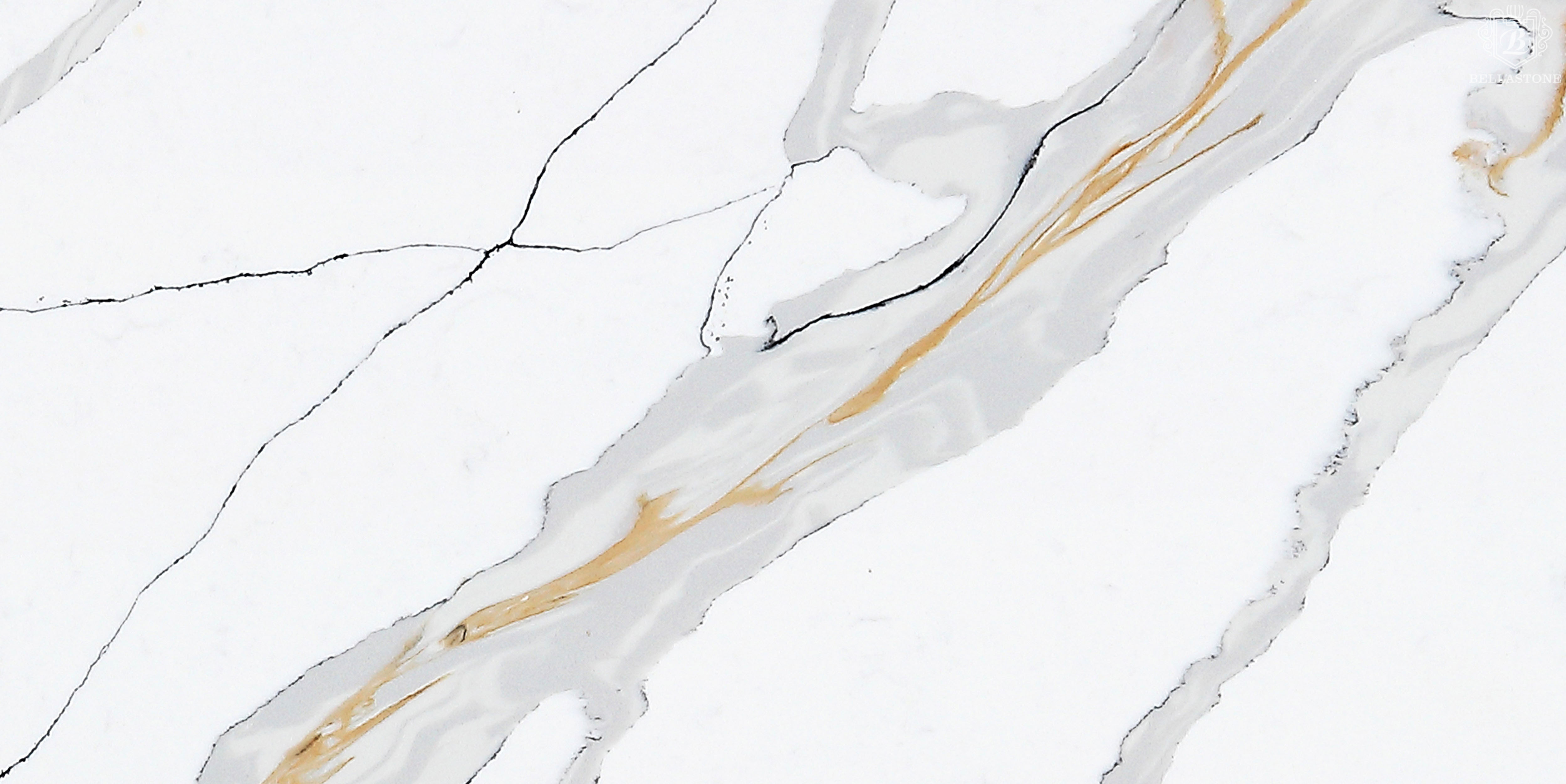
Case study: Bellastone Artificial Quartz Stone Classic Collection - BL9423 Golden Highlight Rooting
Bellastone Artificial Quartz Stone Classic Collection - BL9423 Golden Highlight Rooting
Inspired by gilded veins, a pure white base intertwines dynamic gray patterns and luminous golden filaments, evoking the natural spectacle of dawn piercing through an icy expanse. Its delicate texture replicates the luxurious feel of rare stone, while the glossy surface radiates a metallic luster. With stain-resistant and wear-resistant properties, it is ideal for luxury countertops and artistic feature walls, infusing spaces with a powerful yet dynamic natural force.
Recommended applications for BL9423
BL9423 is designed as an engineered stone for countertops in residential kitchens, High Quality hotel bathrooms, and interior feature walls where visual impact and ease of maintenance are priorities. The glossy metallic sheen suits luxury projects and cabinetry contrast schemes.
How BL9423 meets common performance specs
A high-quality engineered quartz like BL9423 typically exhibits low water absorption (<0.5%), high flexural strength, and strong stain resistance. For buyers, request the product data sheet with measured values for modulus of rupture, density, and Taber abrasion results. These values indicate resistance to chip and scratch, and help decide suitability for heavy-use areas.
Maintenance, cleaning, and long-term care
To preserve the metallic luster of BL9423, follow manufacturer cleaning instructions: use a mild detergent or a pH-neutral cleaner, avoid abrasive pads and harsh chemicals, and immediately wipe acidic spills (lemon, vinegar). For tougher stains, manufacturers often recommend non-abrasive paste cleaners and professional stone-polishing services for restoration if needed.
Health, safety, and environmental certifications
Respirable crystalline silica: what specifiers must know
Cutting and fabrication of engineered quartz releases respirable crystalline silica, which has well-documented health risks. Regulatory and advisory bodies such as OSHA provide guidance and permissible exposure limits; see OSHA's resource on silica hazards here. Designers should ensure fabricators follow wet cutting, local exhaust ventilation, and respiratory protection protocols.
The International Agency for Research on Cancer (IARC) classifies crystalline silica as a carcinogen when inhaled in the form of respirable particles; this is a critical safety factor when evaluating suppliers and fabrication shops.
Indoor air quality, VOCs and emissions
Although engineered stone is primarily mineral and resin, some production lines can emit trace VOCs. Seek GREENGUARD or similar indoor air-quality certifications for materials installed in enclosed spaces. If specifications or test reports show measurable VOC emissions, evaluate them relative to occupancy and ventilation plans.
Environmental management and responsible sourcing
Environmental credentials such as ISO 14001 (environmental management systems) or published Environmental Product Declarations (EPDs) help quantify lifecycle impacts. Suppliers that offer EPDs or clear waste/recycling policies make it easier to meet green-building targets and procurement requirements.
Quick comparison: Bellastone BL9423 vs typical engineered quartz vs natural granite
| Property | Bellastone BL9423 (typical claims) | Typical engineered quartz | Natural granite |
|---|---|---|---|
| Water Absorption | <0.5% | 0.1–0.5% | 0.2–2% (varies) |
| Mohs Hardness | 6–7 | 6–7 | 6–7 |
| Stain Resistance | High (resin sealed) | High | Medium (may need sealing) |
| Thermal Shock Resistance | Moderate (avoid hot pans) | Moderate | High (varies by stone) |
| Typical Use | Luxury countertops, feature walls | Residential & commercial countertops | Countertops, exterior cladding |
FAQ
Q: What certificates should I ask for when buying engineered stone for countertops?
A: Request third-party test reports for physical properties (flexural strength, water absorption, abrasion), SDS, food-contact compliance if needed (e.g., NSF/ANSI), VOC testing, and evidence of quality or environmental systems (ISO certificates or EPDs). Also obtain fabrication and safety guidelines related to silica exposure.
Q: How do I verify that a test report is genuine?
A: Verify the testing laboratory accreditation (e.g., ISO/IEC 17025), check lab contact details and report dates, and confirm that the sample ID matches the product lot or sample provided. If in doubt, request direct confirmation from the testing lab.
Q: Is engineered quartz safe for kitchens?
A: Yes, high-quality engineered quartz used for countertops is safe for standard residential kitchen use when installed correctly and maintained per manufacturer guidance. Ensure your product has appropriate stain resistance and any food-contact certifications required for your jurisdiction.
Q: What should I do about silica dust during fabrication?
A: Ensure fabricators use wet cutting, local exhaust ventilation, and appropriate respiratory protection for workers. Confirm that the fabricator follows local occupational safety rules. For more information on silica safety, see OSHA's guidance here.
Q: How can I keep the metallic luster of BL9423 looking its best?
A: Clean with mild, non-abrasive cleaners, avoid harsh acids and abrasive pads, and promptly wipe spills. Use recommended sealants or polishes only if specified by the manufacturer; otherwise routine gentle cleaning is usually sufficient.
If you'd like the product data sheet, third-party lab reports, or a sample of Bellastone Artificial Quartz Stone Classic Collection - BL9423 Golden Highlight Rooting for testing and comparison, contact our team for assistance. Our technical specialists can provide certificates, maintenance guides, and install guidance tailored to your project.
Contact us to request the BL9423 datasheet, order samples, or discuss project specifications — our product and technical teams are ready to help.
Additional authoritative resources: Engineered stone — Wikipedia, ISO — International Organization for Standardization, Natural Stone Institute, and OSHA silica guidance.

Design Ideas Using Bellastone Calacatta Passo Quartz

Certifications and Compliance: What Buyers Should Verify for Bellastone
Durability Metrics Buyers Need to Know for Carrara Quartz
Maintenance Tips for Engineered Stone Countertops 2026
FAQ
How does quartz stone compare to natural marble?
Durability: Higher hardness (Mohs scale 7 vs. marble 3-5),
Stronger resistance to scratching and impact
Stability: It has almost zero water absorption rate, with no risk of infiltration or discoloration, while marble requires regular sealing and maintenance
Consistency: The color and texture are controllable, without obvious color differences and flaws found in natural stone materials
Hygienic: Compact and non-porous surface, antibacterial and mold-resistant, easy to clean, meets food contact safety standards
Economical: low long-term maintenance costs, longer service life, and better overall cost-effectiveness
How to clean and maintain quartz stone?
Routine maintenance is quite straightforward:
Regular cleaning: Wipe with a soft cloth and neutral detergent, no special maintenance agent required
Stubborn stains: Use special cleaning paste for stone materials, avoid using strong acid or alkali products
Repair suggestion: If superficial scratches are accidentally caused, contact a professional for surface polishing repair
Precautions: Avoid leaving high-temperature cookware on the stove for extended periods (it is recommended to use a trivet). Do not
What scenarios is it applicable to?
Kitchen countertops and island tops, bathroom vanity tops, wall decorations and feature walls, commercial interior design, restaurants and public buildings, residential renovation projects.
Care & Maintenace
Can I cut food directly on the quartz surface?
While the surface is scratch-resistant, we recommend using a cutting board to protect both the quartz and your knives.
Printed Artificial Quartz Stone
Can I customize patterns or colors?
Yes. BELLASTONE offers customized printed designs, colors, and slab specifications for OEM and project orders.
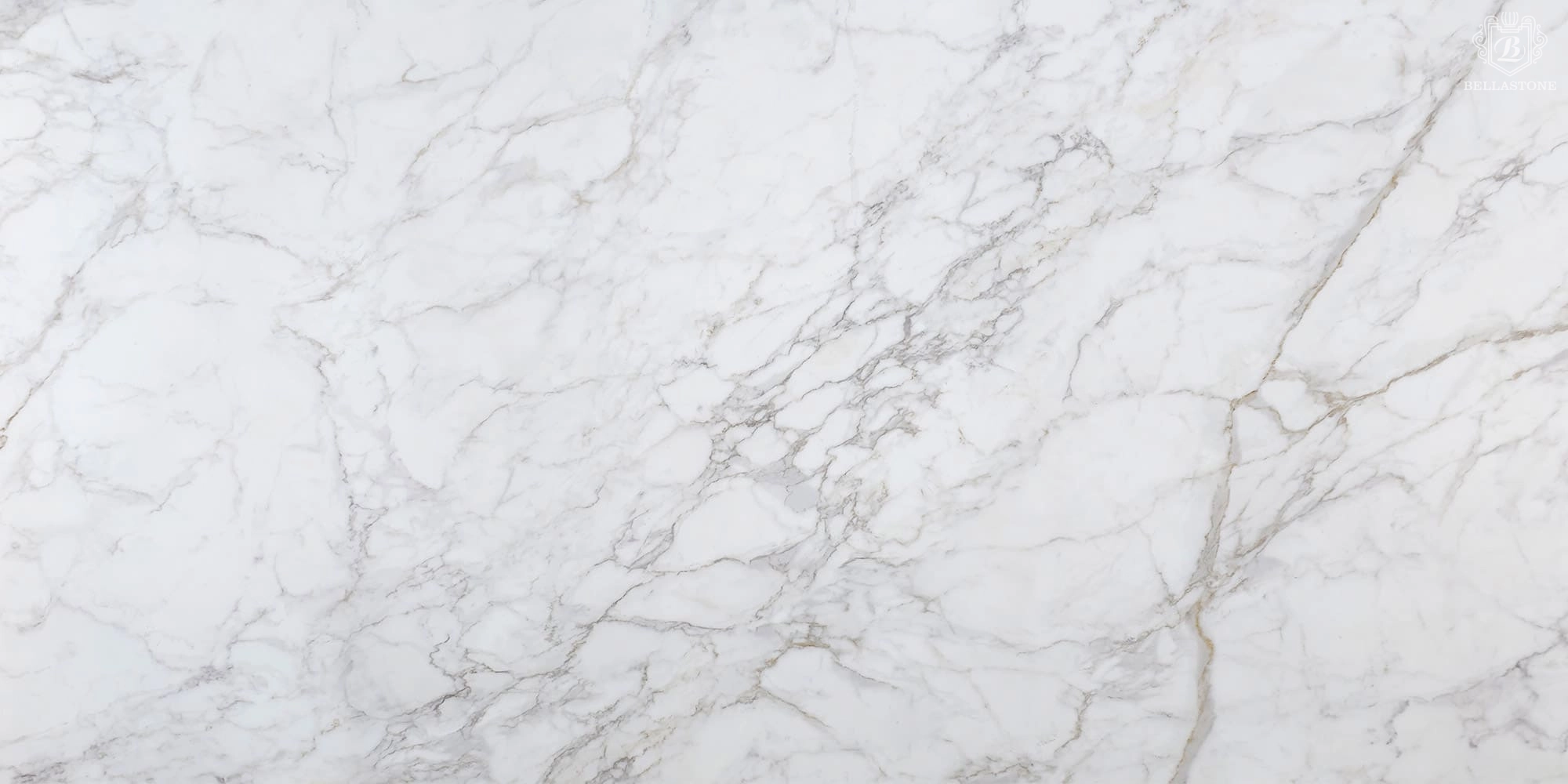
BELLASTONE Artificial Quartz Stone Printed Quartz Collection
Taking inspiration from the wave marks of snow-capped mountains, the white base is embellished with natural gray patterns, resembling the freehand layering of wind-eroded ice rocks.
The soft light texture replicates the texture of the original stone, with undulating textures resembling an eternal dialogue between ridges and waves. The high hardness and anti-pollution structure are suitable for kitchen and bathroom countertops and background walls, capturing the flowing poetry of natural power in minimalism.
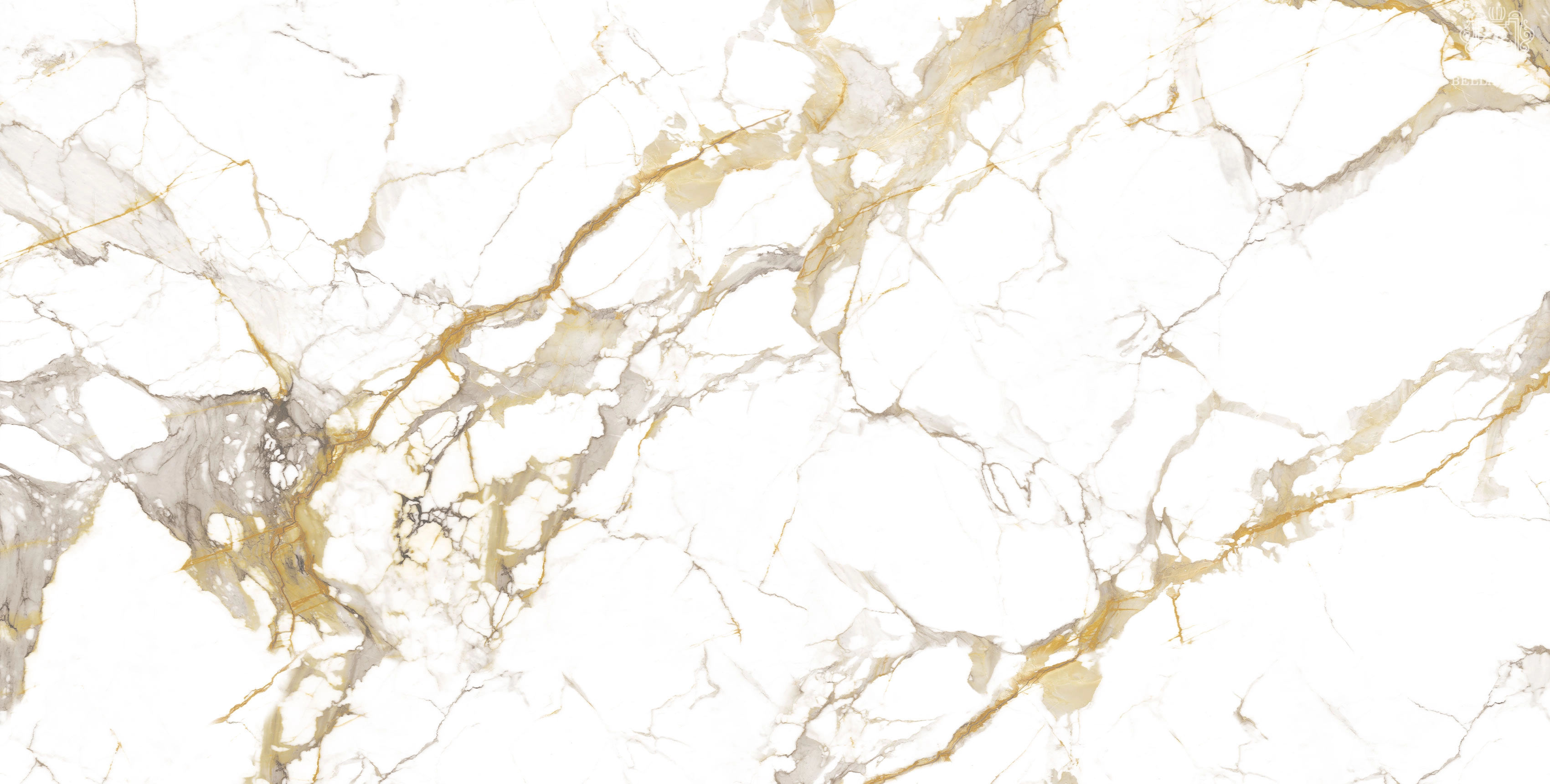
BELLASTONE Artificial Quartz Stone Printed Quartz Collection - BL5814 Ages Gilded
The soft light texture replicates the texture of the original stone, with undulating textures resembling an eternal dialogue between ridges and waves. The high hardness and anti-pollution structure are suitable for kitchen and bathroom countertops and background walls, capturing the flowing poetry of natural power in minimalism.

Bellastone Artificial Quartz Stone New Collection - BL8811 Taj Ivory
Taking inspiration from the ivory white of the Taj Mahal, the pure base is inlaid with light golden lines, like the gentle trajectory of the morning sun passing over the palace.
Exquisite texture replicated natural stone veins, with a soft and luxurious texture blended on the surface. The anti pollution and wear-resistant structure is suitable for high-end countertops and background walls, injecting eternal and sacred Eastern poetry into the space.

BELLASTONE Artificial Quartz Stone Printed Quartz Collection - BL5009 Rockwell
Deep grey tones form the base, with white veins elegantly diffused like an ink wash painting. The surface is flawlessly smooth and even. Combining the aesthetic appeal of natural stone with the superior durability of quartz, it is wear-resistant and easy to clean—perfect for infusing modern elegance into kitchens and bathrooms.

BELLASTONE Artificial Quartz Stone Printed Quartz Collection - BL5027 Golden Velvet
A pristine, snow-white canvas is elegantly brushed with flowing gold veins, creating a poetic blend of luxury and dynamism. The glazed-smooth surface offers scratch resistance, durability, and stain protection, making it ideal for kitchen countertops, bathroom accents, and beyond. With minimalist elegance, it defines modern sophistication and imbues spaces with timeless artistic charm.

BELLASTONE Artificial Quartz Stone Printed Quartz Collection - BL5806 Woven Time
The soft light texture replicates the texture of the original stone, with undulating textures resembling an eternal dialogue between ridges and waves. The high hardness and anti-pollution structure are suitable for kitchen and bathroom countertops and background walls, capturing the flowing poetry of natural power in minimalism.

BELLASTONE Artificial Quartz Stone Printed Quartz Collection - BL5018 Lamia
Crafted with a base as pure as winter's first snow, graceful grey veins meander like flowing streams, adorned with scattered golden lines reminiscent of starlight from the galaxy. The mirror-smooth surface seamlessly blends natural elegance with modern technology. Scratch-resistant, stain-proof, and easy to maintain, it elevates kitchens, countertops, and spaces with high-end artistry, embodying the light luxury and sophistication of contemporary home aesthetics.

Bellastone Artificial Quartz Stone New Collection - BL8804 Verdant
Taking inspiration from panda elements, the ink texture on the snow-white base naturally wanders, resembling the freehand paw prints of a young bear stepping on the first snow.
Soft texture replicated on Xuan paper, with a glossy surface infused with the charm of Eastern ink wash. The high hardness and zero permeability structure is suitable for kitchen island countertops and tea room countertops, condensing eternal black and white poetry with contemporary design language.
Whether you're exploring design trends or planning your next build, our team is here to support with product advice, pricing, and tailored solutions.
Rest assured that your privacy is important to us, and all information provided will be handled with the utmost confidentiality.
By clicking "Send Inquiry Now", I agree to your processing my personal data.
To see how to withdraw your consent, how to control your personal data, and how we process it, please see our Privacy Policy and Terms of Use.
Bellastone, Premium Quartz Manufacturer & Exporter
© 2025 BELLASTONE. All Rights Reserved. | Privacy Policy | Terms and Conditions | Sitemap
Facebook
Linkedin
YouTube