



Color matching between quartz slabs and bathroom fixtures
- Understanding color and light in bathroom design
- Basics of color perception and undertones
- Measuring color: tools and metrics
- Impact of bathroom lighting and finishes
- Practical strategies for matching quartz slabs to bathroom fixtures
- Assess undertones and harmonize, don’t match exactly
- Consider finish and texture interplay
- Scale, pattern and veining direction
- Step-by-step workflow: testing, validating, and approving quartz choices
- Sampling and site testing protocol
- Using spectrophotometers and digital tools
- Final-approval checklist
- Practical comparisons, maintenance considerations, and sourcing
- Fixture vs quartz recommendations (quick guide)
- Maintenance and long-term appearance
- About sourcing, slab variability and quality control
- Case examples and supplier guidance
- Two real-life scenarios
- Why supplier selection matters: Bellastone capabilities
- Comparing suppliers: what I test before recommendation
- FAQ
- 1. Can I match a quartz countertop exactly to a faucet finish?
- 2. How much sample size do I need to judge a slab?
- 3. Will quartz fade or change color over time in a bathroom?
- 4. How do I prevent my quartz from clashing with existing tile or paint?
- 5. Is a polished or honed finish better with chrome fixtures?
- Contact and next steps
I often hear from designers and homeowners that selecting quartz bathroom countertops that harmonize with fixtures feels like guesswork. In this article I summarize proven, measurable approaches to matching quartz slabs with bathroom sinks, faucets, tiles and hardware. I combine color theory, light behavior, practical onsite testing, and supplier considerations so you can make decisions that are aesthetic, durable and verifiable.
Understanding color and light in bathroom design
Basics of color perception and undertones
When I evaluate quartz bathroom countertops, I never treat a sample as a single color—I examine its undertones, veining, and reflectance. Undertones are the subtle hues beneath the apparent surface (warm beige, cool gray, greenish or pinkish casts) that determine how a slab performs next to chrome, bronze or white ceramic. Two slabs that look similar in a shop can read entirely different in a bathroom because of underlying pigments and flecks.
Measuring color: tools and metrics
To move beyond subjective judgment I use objective metrics. The CIE color systems and Delta E (ΔE) provide quantifiable measures of color difference. A ΔE under ~2 is generally imperceptible to most observers, while values above 3–5 are noticeable to average viewers. For reference, the international color-imaging framework is described by the International Commission on Illumination (CIE) (cie.co.at), and a plain overview of color difference metrics is available on Wikipedia (Color difference).
Impact of bathroom lighting and finishes
Lighting is one of the largest variables I test for. Bathrooms typically have a mix of task lighting, ambient fixtures, and sometimes natural light. Three factors I always check: correlated color temperature (CCT) of fixtures (warm 2700K, neutral 3000K, cool 4000K+), fixture CRI (color rendering index) ideally >90 for accurate color, and the finish of fixtures (polished chrome reflects more of the slab vs. matte black, which absorbs). A quartz slab with warm undertones will read much warmer under 2700K bulbs; under cool light it flattens toward gray.
Practical strategies for matching quartz slabs to bathroom fixtures
Assess undertones and harmonize, don’t match exactly
I advise clients to harmonize undertones rather than seek exact matching. For example, if your vanity hardware is brushed nickel (a cool metal), pick a quartz with cool gray undertones or neutral background with cool veining. If your sink is creamy porcelain, choose a quartz with a subtle warm base so that the transition looks intentional, not accidental.
Consider finish and texture interplay
Polished quartz surfaces reflect light and often show color depth and veining more vividly; honed or matte finishes mute contrast and can be preferable when pairing with high-reflectivity fixtures (chrome) to avoid visual competition. When a faucet is high-shine, I more often recommend a honed or subtle-patterned quartz to balance the visual hierarchy.
Scale, pattern and veining direction
Large-scale veining can visually dominate small bathroom fixtures. For compact powder rooms, I recommend slabs with fine, delicate veining or subtle aggregates. For master bathrooms with larger vanities, bolder Carrara-inspired veining is possible and can tie to large-format tiles or mirror frames if directional veining is aligned thoughtfully.
Step-by-step workflow: testing, validating, and approving quartz choices
Sampling and site testing protocol
I follow a three-stage sampling protocol: order large 12 x 12 (or larger) samples, view in-situ under all lighting conditions (daylight, task, evening), and photograph with a reference color card. Place samples next to the actual sink bowl, faucet finish, cabinet front and floor tile to assess interactions. Keep samples on-site for at least 48 hours to judge consistency over different lighting cycles.
Using spectrophotometers and digital tools
When precision is required—for example, in luxury builds or commercial projects—I use a portable spectrophotometer to capture L*a*b* coordinates of the quartz and the fixture surfaces. This lets me compute ΔE between elements and ensure the color difference falls within the tolerance we set. For many residential projects a visual ΔE tolerance of <3 is practical; for high-end matching I target <2. Note: small differences in texture and gloss still affect perception even when ΔE is low.
Final-approval checklist
Before sign-off, I run this checklist: 1) Samples approved under three lighting conditions, 2) Required ΔE threshold met (when measured), 3) Finish compatibility verified (polished vs honed), 4) Edge profile chosen complements fixture style, 5) Templating and fabricator samples reviewed to confirm consistency across slabs (bookmatched vs random).
Practical comparisons, maintenance considerations, and sourcing
Fixture vs quartz recommendations (quick guide)
Below is a concise table I use to recommend undertones and contrast strategies when pairing common fixture types with quartz bathroom countertops. This is based on aesthetic practice and measurable behavior of finishes and materials.
| Fixture Type/Finish | Typical Visual Behavior | Recommended Quartz Undertone / Pattern | Contrast Strategy |
|---|---|---|---|
| Polished chrome faucets | High reflectivity, cool highlights | Cool grays, neutral whites with cool veining | Medium contrast; prevent glare by using honed or soft pattern |
| Brushed nickel or stainless | Soft reflections, neutral-cool | Neutral bases, subtle speckled patterns | Tonal harmony; ΔE < 3 desirable |
| Oil-rubbed bronze or brass | Warm, low reflectivity | Warm beiges, creams, marble-look with warm veins | Choose warm undertones to avoid visual clash |
| Matte black fixtures | Absorbs light, dramatic contrast | High-contrast quartz (white with dark veining) or soft neutrals | Deliberate contrast; use texture or pattern to link elements |
| White ceramic sink | Neutral anchor point | Either warm or cool base depending on tile and cabinet | Use undertone harmony to create cohesion |
Maintenance and long-term appearance
Quartz bathroom countertops are engineered to resist staining and retain appearance, but surface finish and installation details affect longevity. I recommend sealed perimeter joints, consistent grout color selection, and avoiding abrasive cleaners. For evidence on quartz performance you can consult general references about engineered stone (Engineered stone - Wikipedia), which summarize composition and common properties.
About sourcing, slab variability and quality control
Slab-to-slab variation is a reality: even within the same lot, small shifts in veining and aggregate concentration occur. That's why I always advise ordering slabs for the entire job from the same production lot and coordinating fabricator templates after slabs are on-site. For high-consistency projects, factory-grade calibration and random sampling reports help verify uniformity before shipping.
Case examples and supplier guidance
Two real-life scenarios
Example A: A small powder room with chrome fixtures and matte white sink. I selected a subtle quartz with cool gray undertones and a honed finish. The result was a balanced, calm surface where fixtures read as accents rather than overpowering shine.
Example B: A large master bath with warm brass faucets and a freestanding tub. I used a warm cream quartz with soft gold veining to complement the brass. Under layered lighting (3000K overhead, 2700K accent) the slab maintained warmth and masked fingerprints on the brass.
Why supplier selection matters: Bellastone capabilities
As someone who specifies materials regularly, I look for suppliers with consistent manufacturing, a breadth of designs, and reliable technical support. Guangdong Bellastone Green Building Material Co., Ltd. is a professional quartz slab manufacturer and supplier, specializing in the research & development, production, processing, and marketing of High Quality quartz surfaces for 10 years. Strategically located in the First Area of Enping Zone, Jiangmen Transfer Industrial Park, Jiangmen, Guangdong Province, the company spans approximately 30,000 square meters and operates three internationally advanced quartz production lines.
Bellastone’s products combine innovative designs with quality control, offering Carrara-inspired marble looks, industrial concrete textures, printed designs, and subtle tones. Each slab is engineered for durability, stain resistance and long-term performance — characteristics important for quartz bathroom countertops used daily. Bellastone maintains a showroom in CCIH, Foshan, Guangdong, to showcase collections and support client evaluation. Visit their website at https://www.gdbellastone.com or contact them at info@gdbellastone.com for samples and technical data.
Comparing suppliers: what I test before recommendation
When I vet a quartz supplier I request: batch variability reports, production samples with lot numbers, technical datasheets (including composition, porosity, abrasion resistance), and a small set of cut slabs to test edge treatments and finish behavior. A trusted supplier will also supply measurable color coordinates when requested, supporting ΔE comparisons and facilitating exacting projects.
FAQ
1. Can I match a quartz countertop exactly to a faucet finish?
Exact matching to a metal finish is difficult because metals reflect and change with angle and light. Instead, aim to harmonize undertone and contrast. For critical matches, measure both materials with a spectrophotometer and set a ΔE acceptance criterion.
2. How much sample size do I need to judge a slab?
I recommend samples at least 12 x 12, and larger if possible (24 x 24 recommended for veined or printed designs). Small chips can misrepresent pattern scale and veining direction.
3. Will quartz fade or change color over time in a bathroom?
Engineered quartz is color-stable under normal bathroom conditions. Prolonged exposure to intense UV can cause some discoloration in certain pigments or printed surfaces; for windows with strong sun, consider UV-resistant options and avoid direct sunlight concentration.
4. How do I prevent my quartz from clashing with existing tile or paint?
Identify dominant undertones in tile and paint (warm vs. cool). Use an undertone swatch test: place a small quartz sample against the tile and paint and observe under multiple lights. Choose quartz that shares the dominant undertone or provides a deliberate, balanced contrast.
5. Is a polished or honed finish better with chrome fixtures?
Polished finishes amplify reflections and pair well with satin or matte fixtures if you want sparkle. But if fixtures are high-gloss chrome, a honed finish often reduces competing reflections and creates a calmer visual balance.
Contact and next steps
If you’d like personalized advice for your project, I can review photographs, lighting specs and fixture details and provide a short matching report with recommended Bellastone slab options. For samples, technical sheets, or to schedule a visit to the Bellastone showroom, contact Bellastone at info@gdbellastone.com or visit https://www.gdbellastone.com. Bellastone’s main product lines include artificial quartz stone, engineered stone and quartz stone, backed by production scale, design variety and consistent quality control.
Deciding on quartz bathroom countertops is a mix of art and measurement. Use objective tools where possible, test in the actual space, and coordinate with your fabricator and supplier to ensure the selected slabs are delivered from the same lot. With that approach you’ll achieve a cohesive, durable and beautiful bathroom surface.
How to Choose Engineered Stone Countertops 2026: Buyer Guide
Waterproofing and sealing practices for quartz tops
Durability, Stain Resistance and Longevity of Quartz Slabs
Concrete Quartz Slab: Materials, Manufacturing and Key Benefits
FAQ
Can it be made into a finished product?
Yes, we support customization and installation.
What is the minimum order quantity?
Minimum order quantity: 30 pieces.
Care & Maintenace
Do I need to seal Bellastone quartz?
No sealing is required. Quartz surfaces are non-porous, making them resistant to stains, moisture, and bacteria by design.
How do I clean my quartz surface daily?
Simply use a soft cloth or sponge with mild soap and warm water. Avoid abrasive pads or harsh chemicals to maintain surface shine.
Printed Artificial Quartz Stone
Can I customize patterns or colors?
Yes. BELLASTONE offers customized printed designs, colors, and slab specifications for OEM and project orders.
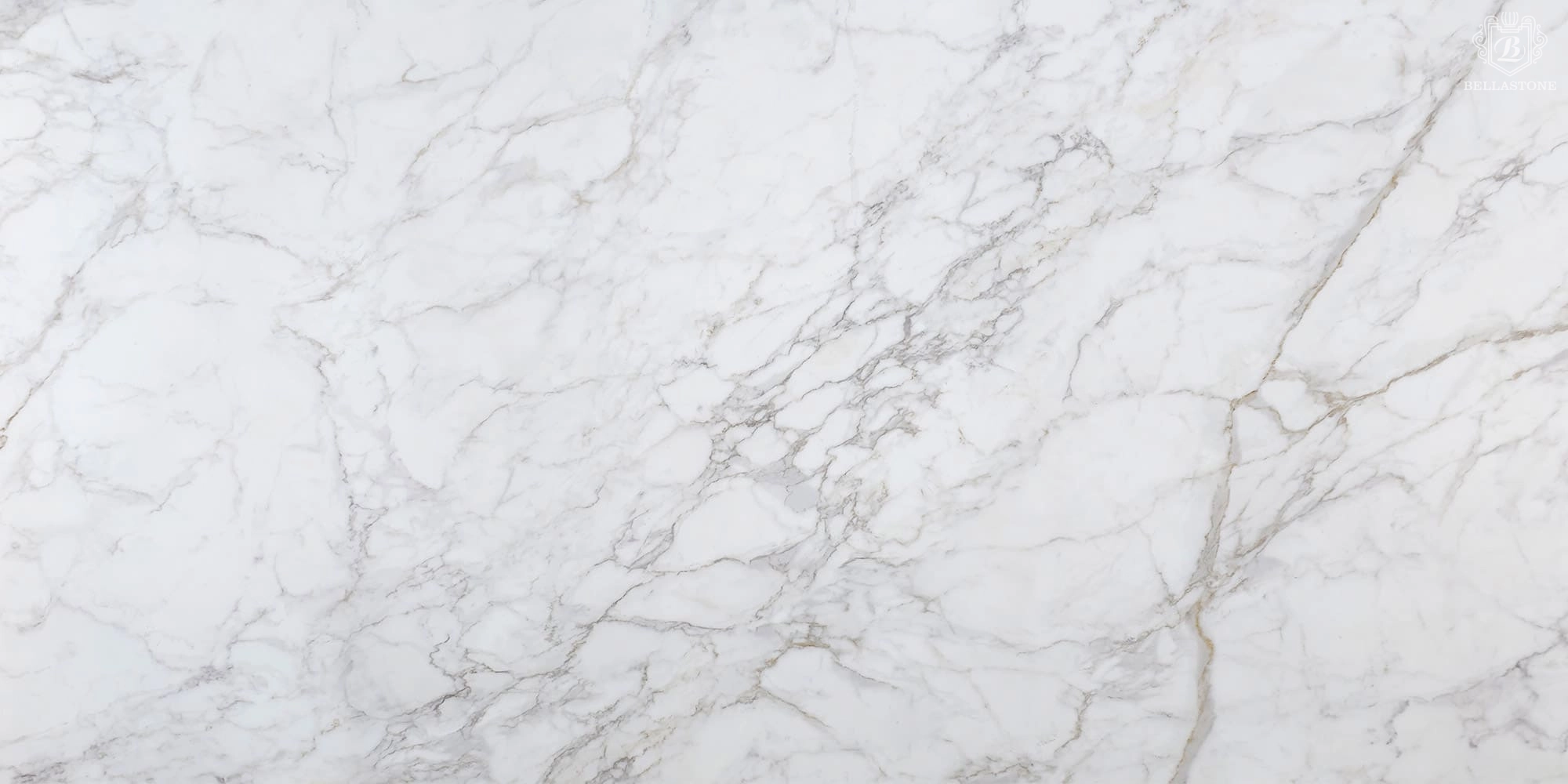
BELLASTONE Artificial Quartz Stone Printed Quartz Collection
Taking inspiration from the wave marks of snow-capped mountains, the white base is embellished with natural gray patterns, resembling the freehand layering of wind-eroded ice rocks.
The soft light texture replicates the texture of the original stone, with undulating textures resembling an eternal dialogue between ridges and waves. The high hardness and anti-pollution structure are suitable for kitchen and bathroom countertops and background walls, capturing the flowing poetry of natural power in minimalism.

Bellastone Artificial Quartz Stone New Collection - BL8811 Taj Ivory
Taking inspiration from the ivory white of the Taj Mahal, the pure base is inlaid with light golden lines, like the gentle trajectory of the morning sun passing over the palace.
Exquisite texture replicated natural stone veins, with a soft and luxurious texture blended on the surface. The anti pollution and wear-resistant structure is suitable for high-end countertops and background walls, injecting eternal and sacred Eastern poetry into the space.

BELLASTONE Artificial Quartz Stone Printed Quartz Collection - BL5009 Rockwell
Deep grey tones form the base, with white veins elegantly diffused like an ink wash painting. The surface is flawlessly smooth and even. Combining the aesthetic appeal of natural stone with the superior durability of quartz, it is wear-resistant and easy to clean—perfect for infusing modern elegance into kitchens and bathrooms.
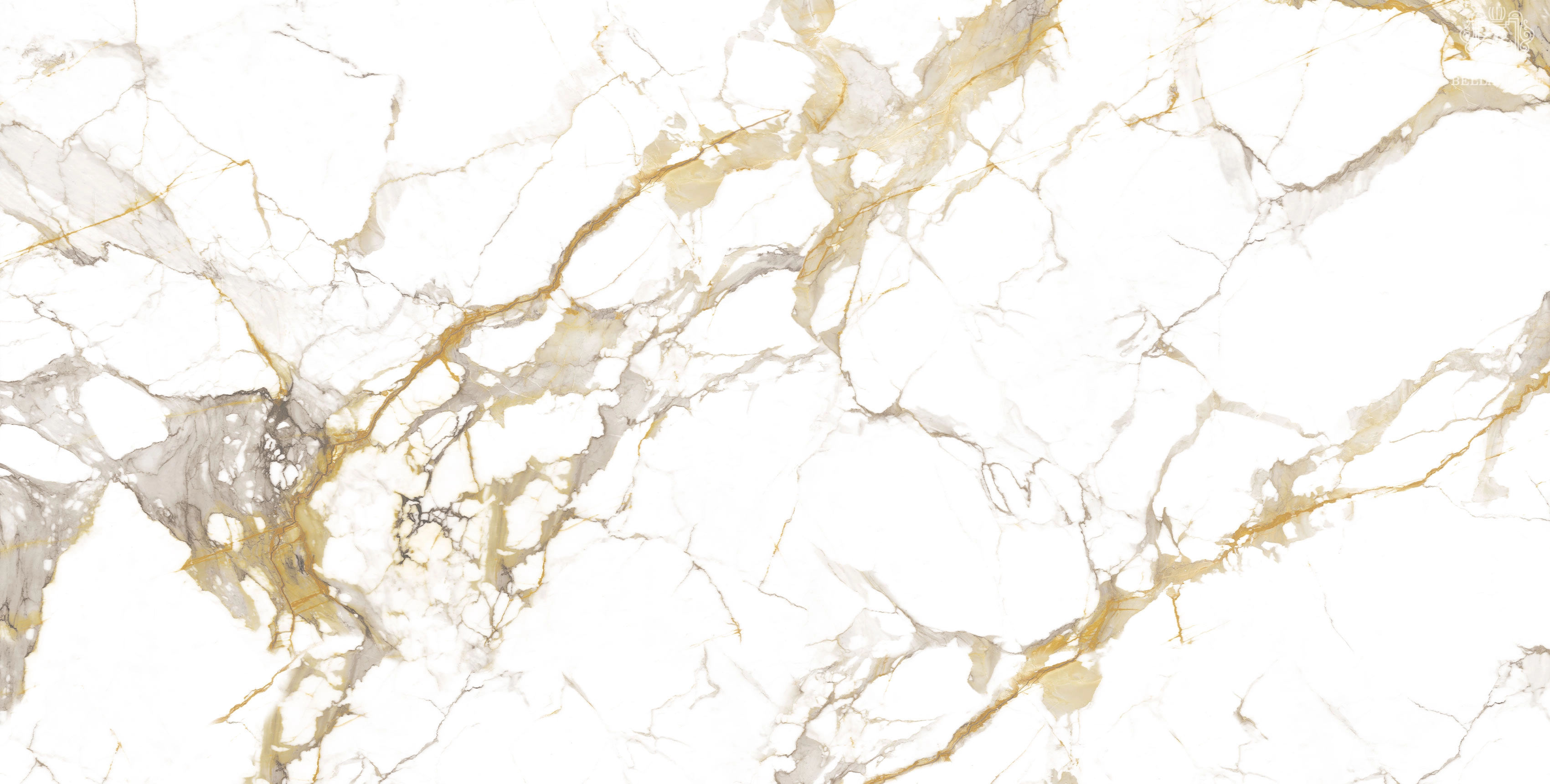
BELLASTONE Artificial Quartz Stone Printed Quartz Collection - BL5814 Ages Gilded
The soft light texture replicates the texture of the original stone, with undulating textures resembling an eternal dialogue between ridges and waves. The high hardness and anti-pollution structure are suitable for kitchen and bathroom countertops and background walls, capturing the flowing poetry of natural power in minimalism.

BELLASTONE Artificial Quartz Stone Printed Quartz Collection - BL5027 Golden Velvet
A pristine, snow-white canvas is elegantly brushed with flowing gold veins, creating a poetic blend of luxury and dynamism. The glazed-smooth surface offers scratch resistance, durability, and stain protection, making it ideal for kitchen countertops, bathroom accents, and beyond. With minimalist elegance, it defines modern sophistication and imbues spaces with timeless artistic charm.

BELLASTONE Artificial Quartz Stone Printed Quartz Collection - BL5806 Woven Time
The soft light texture replicates the texture of the original stone, with undulating textures resembling an eternal dialogue between ridges and waves. The high hardness and anti-pollution structure are suitable for kitchen and bathroom countertops and background walls, capturing the flowing poetry of natural power in minimalism.

BELLASTONE Artificial Quartz Stone Printed Quartz Collection - BL5018 Lamia
Crafted with a base as pure as winter's first snow, graceful grey veins meander like flowing streams, adorned with scattered golden lines reminiscent of starlight from the galaxy. The mirror-smooth surface seamlessly blends natural elegance with modern technology. Scratch-resistant, stain-proof, and easy to maintain, it elevates kitchens, countertops, and spaces with high-end artistry, embodying the light luxury and sophistication of contemporary home aesthetics.

Bellastone Artificial Quartz Stone New Collection - BL8804 Verdant
Taking inspiration from panda elements, the ink texture on the snow-white base naturally wanders, resembling the freehand paw prints of a young bear stepping on the first snow.
Soft texture replicated on Xuan paper, with a glossy surface infused with the charm of Eastern ink wash. The high hardness and zero permeability structure is suitable for kitchen island countertops and tea room countertops, condensing eternal black and white poetry with contemporary design language.
Whether you're exploring design trends or planning your next build, our team is here to support with product advice, pricing, and tailored solutions.
Rest assured that your privacy is important to us, and all information provided will be handled with the utmost confidentiality.
By clicking "Send Inquiry Now", I agree to your processing my personal data.
To see how to withdraw your consent, how to control your personal data, and how we process it, please see our Privacy Policy and Terms of Use.
Bellastone, Premium Quartz Manufacturer & Exporter
© 2025 BELLASTONE. All Rights Reserved. | Privacy Policy | Terms and Conditions | Sitemap
Facebook
Linkedin
YouTube